“Men’s Health Isn’t Just Personal—It’s Structural:”
Why This Conversation Matters Now More Than Ever
A Response from Men’s Health Network
—
Men’s Health Isn’t Just Personal—It’s Structural
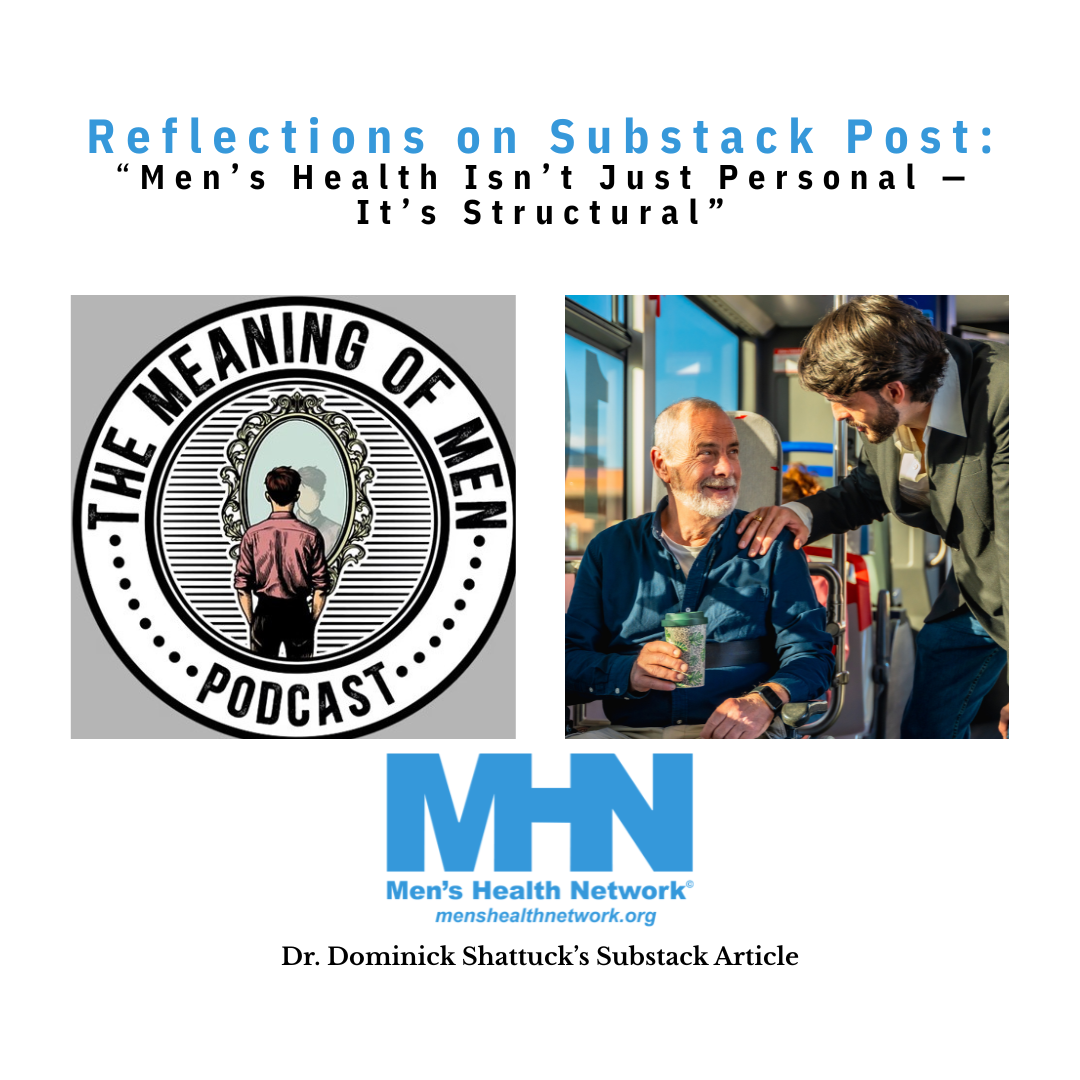
Reflections from my conversation on The Meaning of Men Podcast
DOMINICK SHATTUCK, PHD
APR 19, 2026
“I recently had the opportunity to join The Meaning of Men podcast to talk about a topic that is often misunderstood: men’s health.
Too often, the conversation starts—and ends—with individual responsibility. Men need to “take better care of themselves,” “go to the doctor,” or “talk more.” While there’s some truth there, it misses a much bigger reality: men’s health outcomes are shaped just as much by systems as by choices.
One of the most visible indicators is the persistent five-year life expectancy gap between men and women. But that gap is really just the surface. Underneath it is a pattern: men are more likely to delay care, less likely to engage in preventive services, and more likely to show up when conditions have already progressed.
The question is not simply why men don’t seek care—it’s why the system isn’t designed to engage them earlier and more effectively.
The Real Problem: Late Entry, Weak Engagement
A key theme in the conversation was timing. Many boys and young men disengage from routine care during adolescence, when they feel healthiest and least vulnerable. That moment, ages 14 to 21, often sets the tone for a lifetime of treating healthcare as something you use only when things go wrong.
By the time many men re-enter the system, it’s under pressure: an injury, a chronic condition, or a crisis.
This isn’t just about awareness. It’s about how care is structured—from the design of entry points to the way interactions feel once men arrive.
Reframing Engagement: Meet Men Where They Are
One of the most promising paths forward is deceptively simple: meet men where they already are.
That means building low-friction entry points in:
- workplaces
• sports environments
• community organizations
• social and “third spaces”
These aren’t just outreach strategies—they’re structural redesigns of how health systems connect with people.
Equally important is how care is framed. Many men respond more strongly when health is positioned in terms of:
- performance
• energy
• reliability
• showing up for family and work
This isn’t about reinforcing stereotypes, it’s about aligning health with motivations that already exist.
What Actually Works
From both research and practice, a few strategies consistently stand out:
- Integrate mental health into primary care, so it’s not a separate, stigmatized step
• Use persistent follow-up systems (reminders, check-ins) to keep men engaged over time
• Give adolescents more autonomy in care settings to build lifelong habits
• Leverage trusted spaces and relationships to normalize engagement
These are not one-off interventions—they are part of a broader shift toward continuous, accessible, and relevant care.
The Bigger Picture
Improving men’s health isn’t just about individual outcomes. It’s about:
- stronger families
• more stable workplaces
• healthier communities
When men are healthier, they are more present as partners, fathers, coworkers, and citizens.
That’s why this conversation matters.
And it’s why policy, system design, and culture all need to move together.
You can find the podcast below:
- Apple: https://podcasts.apple.com/gb/podcast/s4-ep15-the-meaning-of-the-mens-health-gap-rethinking/id1787801829?i=1000761765489
• Spotify: https://open.spotify.com/episode/76btaukG0rFYmUkxCeUmB0
For additional insights from Dr. Shattuck, visit his Substack: https://dominickmenshealth.substack.com”
—
Why This Conversation Is So Timely
At Men’s Health Network, we believe Dr. Shattuck’s observations arrive at exactly the right moment.
For decades, conversations surrounding men’s health have often focused on personal responsibility alone. While personal choices absolutely matter, they do not tell the entire story.
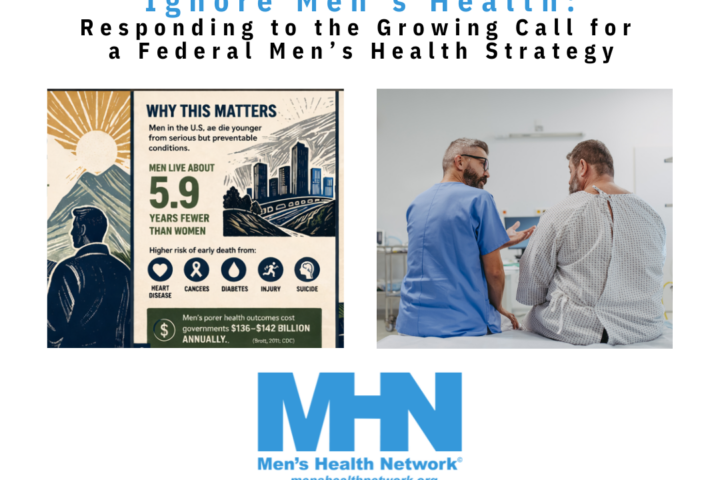
The reality is that many of the health challenges facing men today are influenced by systems, structures, and environments that affect how men engage with healthcare throughout their lives. Men continue to die nearly six years earlier than women on average in the United States. They experience higher rates of suicide, workplace fatalities, substance misuse, cardiovascular disease, and many preventable chronic conditions. Yet these outcomes are frequently discussed only after a crisis occurs.
What Dr. Shattuck highlights is something that public health professionals have increasingly recognized: if we want different outcomes, we need different approaches.
The question should not simply be, “Why aren’t men seeking care?”
The question should also be, “How can healthcare systems better engage men before problems become emergencies?”
This shift in thinking is important because it moves the conversation away from blame and toward solutions.
The Missing Years
One of the most compelling points raised in the podcast is the gap that often occurs during adolescence and early adulthood.
Young men frequently age out of pediatric care without establishing a strong relationship with an adult healthcare provider. During these years, they may feel healthy, invincible, and disconnected from healthcare altogether. By the time many men return to the healthcare system, they may already be dealing with significant health concerns.
This pattern can have lifelong consequences.
The years between adolescence and middle age often represent missed opportunities for:
- Preventive screenings
• Mental health support
• Lifestyle interventions
• Cardiovascular risk assessment
• Cancer awareness and education
• Relationship-building with healthcare providers
The result is that healthcare becomes reactive rather than preventive.
Meeting Men Where They Live, Work, Play, and Pray
One reason Men’s Health Network has long emphasized community engagement is because healthcare does not begin and end in a clinic.
For more than 30 years, MHN has encouraged healthcare outreach in the places where men naturally gather and spend their time. That includes workplaces, community centers, houses of worship, sporting events, educational institutions, veterans’ organizations, and local community events.
The goal is not simply to advertise healthcare.
The goal is to make healthcare feel relevant, accessible, and approachable.
When health education is brought directly into communities, conversations become easier. Preventive care becomes more visible. Barriers become lower.
Most importantly, healthcare becomes something that is integrated into daily life rather than reserved only for moments of illness.
Why Policy Matters
The timing of this discussion is also important because conversations around men’s health policy are gaining momentum nationally.
Recent efforts, including H.R. 7602, the State of Men’s Health Act, reflect growing recognition that men’s health outcomes deserve focused attention and study. Discussions surrounding preventive care, workforce health, mental health, fatherhood, caregiving, and the Lifespan Gender Gap are increasingly entering public policy conversations.
Importantly, these efforts are not about competing with other health priorities.
They are about recognizing that men’s health challenges have real impacts on families, communities, employers, healthcare systems, and society as a whole.
Healthier men contribute to healthier families. Healthier families contribute to healthier communities.
Looking Forward
The future of men’s health will require more than awareness campaigns alone.
It will require healthcare systems that are easier to navigate, policies that recognize men’s unique barriers to care, providers who understand how to engage male patients effectively, and communities willing to have honest conversations about prevention and well-being.
Dr. Shattuck’s podcast discussion serves as an important reminder that men’s health is not solely a personal issue. It is a public health issue. It is a family issue. It is a workforce issue. And increasingly, it is a policy issue.
The sooner we begin designing systems that engage men earlier, more effectively, and more consistently, the sooner we can begin closing the Lifespan Gender Gap and creating healthier outcomes for men, boys, and the people who care about them.
At Men’s Health Network, we welcome this growing conversation and encourage everyone to listen, learn, and continue helping advance a future where preventive care, health education, and healthcare engagement are accessible to every man throughout his lifespan.