Testicular Cancer Awareness Month 2026: What Comes Next?

As Testicular Cancer Awareness Month concludes, the focus shifts from awareness to action—encouraging individuals to continue conversations, share resources, and support early detection efforts. Testicular cancer primarily affects young men ages 15–35, and outcomes are highly favorable when identified early, making education and communication critical. The blog emphasizes that small, everyday actions—like speaking up, checking in, or sharing information—can lead to life-saving outcomes. It also reinforces that awareness should extend beyond April, helping build long-term habits and a culture where men’s health is openly discussed and prioritized. Looking ahead, Men’s Health Month 2026 expands this momentum, promoting broader engagement across prevention, education, and community outreach, with opportunities to get involved through toolkits and educational resources.Continue reading

Testicular Cancer Awareness Month 2026: Starting the Conversation Early & Why Awareness Can’t Wait

Testicular Cancer Awareness Month emphasizes the importance of early detection and open conversations, especially for young men ages 15–35 who are most at risk. Through education and awareness, individuals are encouraged to recognize changes, speak up, and engage with healthcare earlier. Stories like Steve’s highlight how a simple conversation can lead to early detection and life-saving outcomes, reinforcing that small moments and supportive relationships play a critical role in improving men’s health.Continue reading

Sleep Apnea Education Week 2026: Recognizing the Signs, Supporting Better Health

Sleep Apnea Education Week raises awareness about a commonly underdiagnosed condition that significantly impacts men’s health. Sleep apnea is linked to serious risks such as cardiovascular disease and chronic fatigue, with symptoms like loud snoring and daytime sleepiness often going overlooked. Encouraging screening, treatment, and open conversations about sleep helps improve overall health, daily functioning, and long-term outcomes.Continue reading

Testicular Cancer Awareness Month… Partners in Care: Know Your Risk. Talk with Your Family.

Testicular Cancer Awareness Month highlights the importance of early detection, education, and open conversations about a cancer that most often affects young men ages 15–35. With nearly 10,000 diagnoses each year in the United States and high survival rates when detected early, awareness and proactive health behaviors are critical. The theme, “Partners in Care: Know Your Risk. Talk with Your Family,” emphasizes the role families and communities play in supporting men’s health through communication, self-awareness, and early engagement with care.Continue reading

Men’s Social Determinants of Health

This blog explains how men’s health goals and outcomes are deeply shaped by social determinants of health (SDOH)—the non-medical factors that influence where men are born, how they are raised, where they work, and how they age. It outlines the five core SDOH—economic stability, education access and quality, healthcare access and quality, neighborhood and built environment, and social and community context—and shows how each affects men’s ability to seek care, make healthy choices, and maintain well-being. The piece emphasizes that men’s health challenges are not due to personal failure, but to structural barriers such as financial strain, limited healthcare access, demanding work schedules, unsafe or resource-poor neighborhoods, and stigma around help-seeking. By increasing awareness of how these determinants interact, the article argues that men can better understand their health challenges, reduce stigma, and support healthier behaviors, ultimately strengthening families, communities, and long-term outcomes for future generations.Continue reading

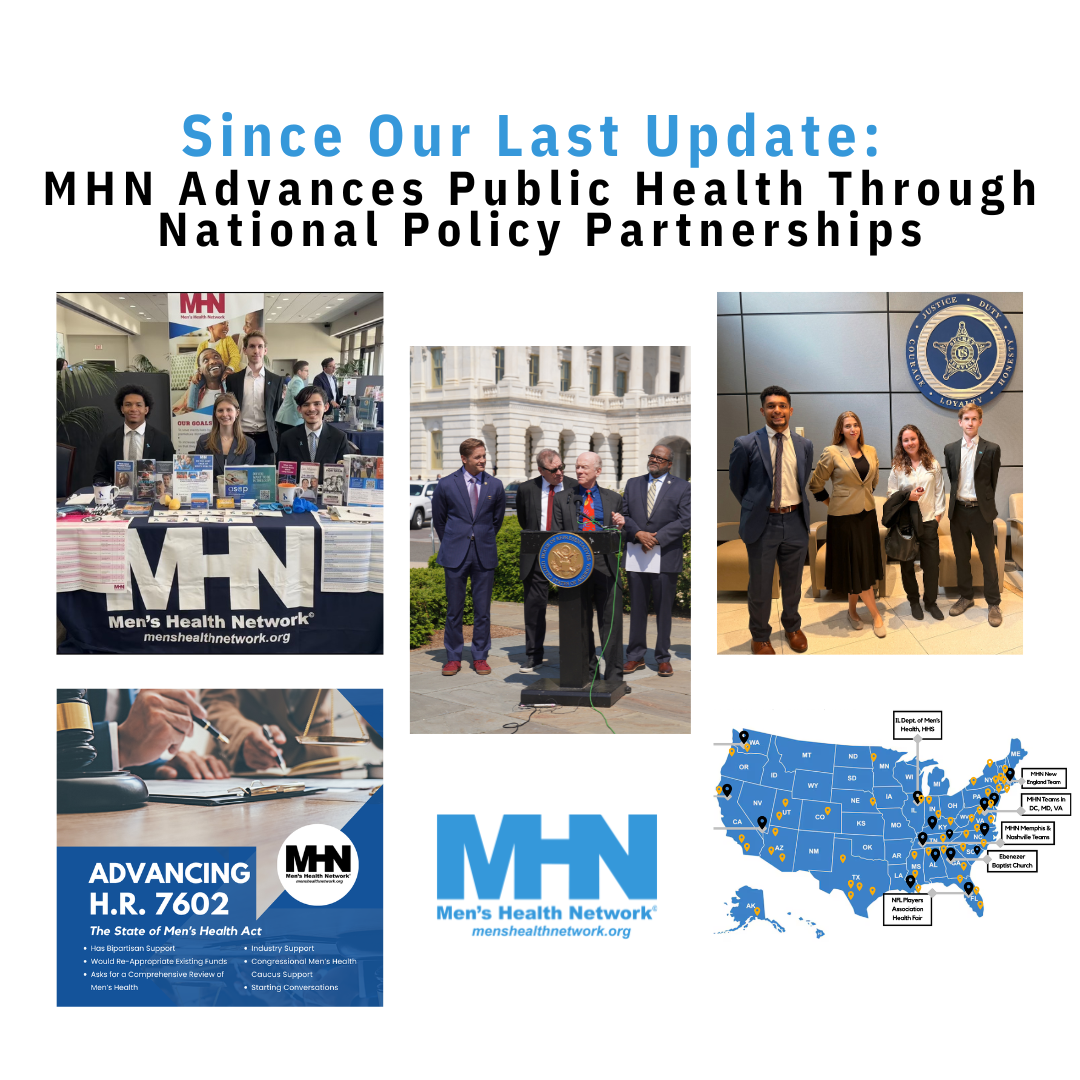
Men’s Health Network Joins National Coalitions: Supporting Bladder Cancer Research Funding and Strengthening the Nursing Workforce

MHN announced its support for two national policy initiatives aimed at improving men’s health outcomes. The organization joined national coalitions advocating for the creation of a Bladder Cancer Research Program within the Department of Defense CDMRP and for federal policy updates recognizing post-baccalaureate nursing degrees as professional degrees to strengthen the healthcare workforce. The announcement highlights the importance of cancer prevention, research investment, and expanding access to care, particularly for men who face higher mortality rates and barriers to preventive services.Continue reading

Masculinity, Health, and the Power of Understanding: Why Dr. Smiler’s Books Make an Impact on the Conversation

This blog highlights how Andrew Smiler brings clarity and balance to today’s conversations about masculinity through Is Masculinity Toxic?: A Primer for the 21st Century and The Masculine Self (7th Edition). Together, these books offer accessible language and evidence-informed insight into how masculine norms shape health, behavior, and relationships, moving the conversation beyond sound bites toward understanding that supports healthier outcomes for men and boys.Continue reading

COVID-19 Vaccination: What Men Need to Know When Deciding On Protection This Season

SR. Science Advisor, Dr. S.J. Giorgianni, PharmD, says: As respiratory illness season returns, COVID-19 remains active and can still pose serious risks—especially for men age 65 and older and those with underlying conditions like obesity, diabetes, heart or lung disease. Updated 2025–2026 CDC guidance recommends seasonal vaccination for these higher-risk groups, noting that immunity can wane and the virus continues to evolve. This season offers both protein subunit and mRNA vaccine options, giving individuals more choice in how they seek protection. Men’s Health Network encourages informed decision-making in consultation with a healthcare provider, as vaccination can help reduce the risk of severe illness, hospitalization, long-COVID, financial strain, and death.Continue reading

Listen to Your Heart: Elevating Heart Valve Disease Awareness During Heart Health Month

Heart Health Month and Heart Valve Disease Awareness Day (February 22) highlight the importance of recognizing and addressing heart valve disease—an often underdiagnosed condition affecting millions of Americans, particularly older adults. Many people experience symptoms that are mistaken for normal aging, delaying diagnosis and treatment. Awareness and early detection are critical, as heart valve disease is treatable when identified in time. Through the Alliance for Aging Research’s Heart Valve Disease Awareness Day campaign, individuals and organizations can access ready-to-use educational and social media resources to help spread awareness. By downloading and sharing these materials, everyone can play a role in encouraging conversations, earlier screening, and better heart health outcomes.Continue reading

Eye Health Mistakes: Some Men Don’t Realize They’re Making

Many men don’t realize that everyday habits like skipping eye exams, excessive screen time, poor diet, and improper eye protection can quietly damage their vision over time. This blog highlights the most common eye health mistakes men make and offers practical, easy-to-follow solutions to protect eyesight, prevent long-term problems, and support healthy vision at every stage of life.Continue reading

Scroll to top