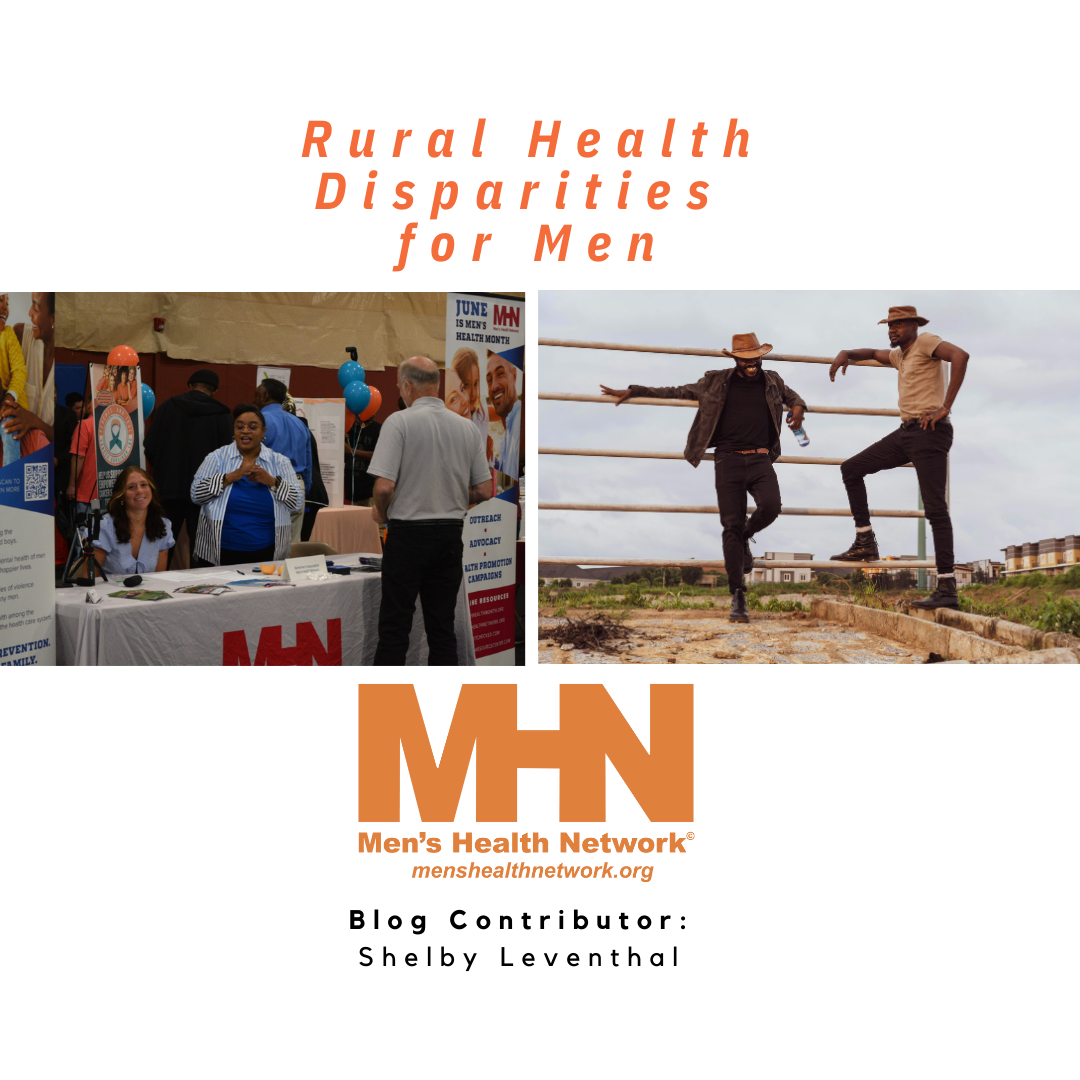
This blog examines how rural health disparities place men at higher risk for poor physical and mental health outcomes due to limited healthcare access, fewer recreational spaces, high insurance costs, food insecurity, and provider shortages. It highlights that rural men experience higher rates of chronic illness, mental health challenges, suicide, and substance use, with disparities varying by region and shaped by social determinants of health such as socioeconomic status, education, environment, and population decline. The article emphasizes that these challenges are structural—not a lack of concern for health—and that blaming rural communities erodes trust in public health efforts. It argues for community-centered solutions that include respectful engagement, local partnerships, mobile healthcare, education, and youth involvement, concluding that improving rural men’s health requires tailored, collaborative approaches that recognize men in rural areas as essential to the well-being of families, workplaces, and communities.Continue reading
Tag: healthcare access
Men’s Social Determinants of Health
This blog explains how men’s health goals and outcomes are deeply shaped by social determinants of health (SDOH)—the non-medical factors that influence where men are born, how they are raised, where they work, and how they age. It outlines the five core SDOH—economic stability, education access and quality, healthcare access and quality, neighborhood and built environment, and social and community context—and shows how each affects men’s ability to seek care, make healthy choices, and maintain well-being. The piece emphasizes that men’s health challenges are not due to personal failure, but to structural barriers such as financial strain, limited healthcare access, demanding work schedules, unsafe or resource-poor neighborhoods, and stigma around help-seeking. By increasing awareness of how these determinants interact, the article argues that men can better understand their health challenges, reduce stigma, and support healthier behaviors, ultimately strengthening families, communities, and long-term outcomes for future generations.Continue reading
Men’s Health Network Joins National Coalitions: Supporting Bladder Cancer Research Funding and Strengthening the Nursing Workforce
MHN announced its support for two national policy initiatives aimed at improving men’s health outcomes. The organization joined national coalitions advocating for the creation of a Bladder Cancer Research Program within the Department of Defense CDMRP and for federal policy updates recognizing post-baccalaureate nursing degrees as professional degrees to strengthen the healthcare workforce. The announcement highlights the importance of cancer prevention, research investment, and expanding access to care, particularly for men who face higher mortality rates and barriers to preventive services.Continue reading
Prostate Cancer Needs More Than a Global Initiative: Ground-Level Action Needed
Men’s Health Network responds to Global Action on Men’s Health’s new report on prostate cancer with a call for urgent, ground-level action. While supporting a WHO-led global initiative, MHN stresses that real impact requires community outreach, empathy-driven education, and trusted local engagement. Prostate cancer is rising fast, especially among underserved men, yet too many go without screening or support. This Men’s Health Month, MHN urges policymakers and the public to bridge the empathy gap and take action now. Learn more, get involved, and help bring life-saving care to where men live, work, play, and pray.Continue reading
Global Data Confirms It: Men’s Health Deserves Focus, Funding, and a Future
In response to the recent PLOS Medicine, "Sex-disaggregated data along the gendered health pathways" Article: It’s a vital contribution to the men’s health conversation and affirms something we’ve said all along: Men's health outcomes will improve when we prioritize men’s health intentionally. At MHN, we see this Article as a roadmap, but it’s up to all of us—health professionals, policymakers, community leaders, and advocates—to act on it. Follow along for all of our commentary on this article... Continue reading
Public Health in Action – A Silent Health Crisis
Of all the things in the fields of both public health and healthcare that pique my interest and attention most, it’s health disparities, specifically the numbers 5 and 7. In a country as productive and innovative as ours, it’s a particularly vexing reality check whenever I’m faced with those two numbers, which I’ve listed below...Continue reading