Testicular Cancer Awareness Month 2026: Starting the Conversation Early & Why Awareness Can’t Wait

Testicular Cancer Awareness Month emphasizes the importance of early detection and open conversations, especially for young men ages 15–35 who are most at risk. Through education and awareness, individuals are encouraged to recognize changes, speak up, and engage with healthcare earlier. Stories like Steve’s highlight how a simple conversation can lead to early detection and life-saving outcomes, reinforcing that small moments and supportive relationships play a critical role in improving men’s health.Continue reading

Sleep Apnea Education Week 2026: Recognizing the Signs, Supporting Better Health

Sleep Apnea Education Week raises awareness about a commonly underdiagnosed condition that significantly impacts men’s health. Sleep apnea is linked to serious risks such as cardiovascular disease and chronic fatigue, with symptoms like loud snoring and daytime sleepiness often going overlooked. Encouraging screening, treatment, and open conversations about sleep helps improve overall health, daily functioning, and long-term outcomes.Continue reading

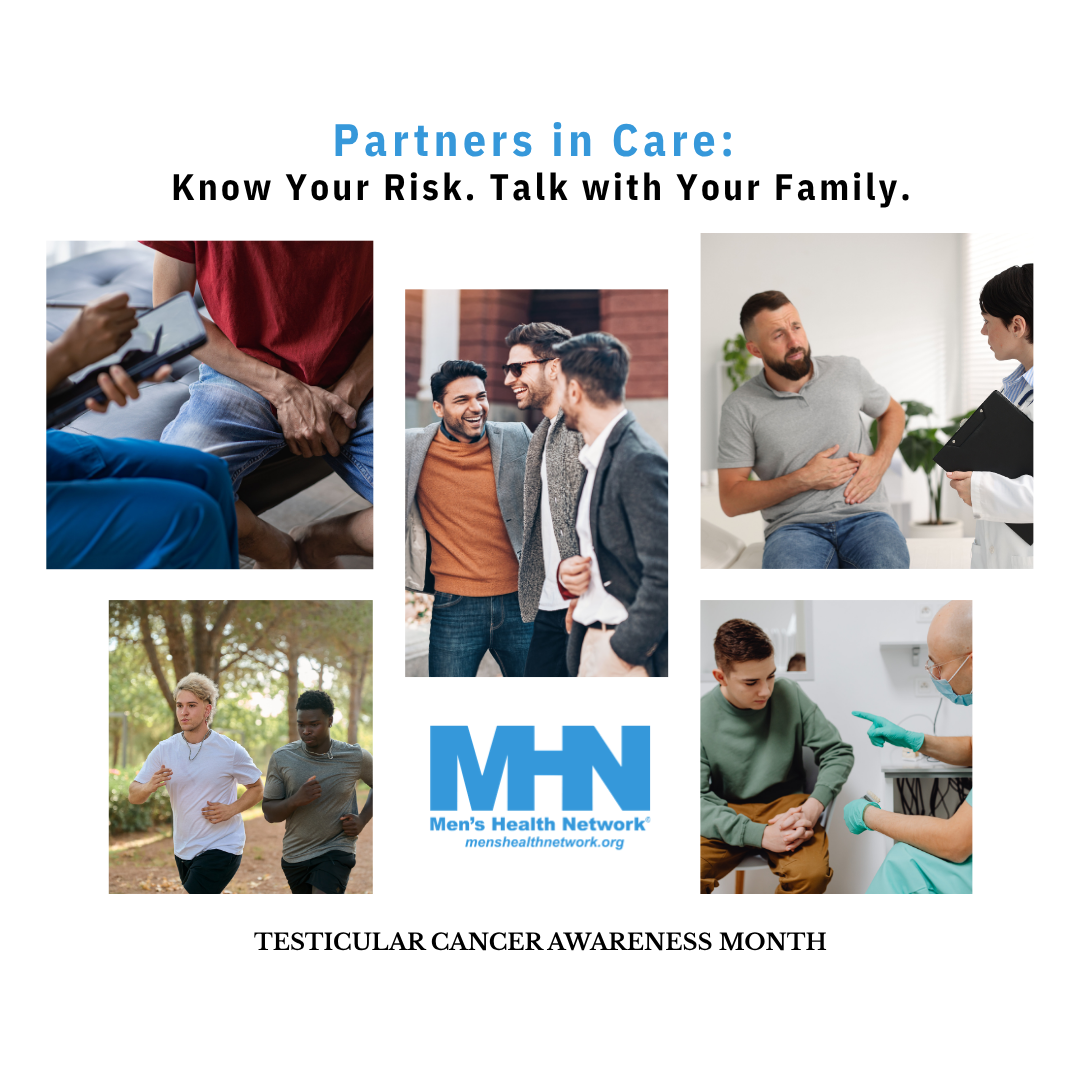
Testicular Cancer Awareness Month… Partners in Care: Know Your Risk. Talk with Your Family.

Testicular Cancer Awareness Month highlights the importance of early detection, education, and open conversations about a cancer that most often affects young men ages 15–35. With nearly 10,000 diagnoses each year in the United States and high survival rates when detected early, awareness and proactive health behaviors are critical. The theme, “Partners in Care: Know Your Risk. Talk with Your Family,” emphasizes the role families and communities play in supporting men’s health through communication, self-awareness, and early engagement with care.Continue reading

Men’s Health Network Joins National Coalitions: Supporting Bladder Cancer Research Funding and Strengthening the Nursing Workforce

MHN announced its support for two national policy initiatives aimed at improving men’s health outcomes. The organization joined national coalitions advocating for the creation of a Bladder Cancer Research Program within the Department of Defense CDMRP and for federal policy updates recognizing post-baccalaureate nursing degrees as professional degrees to strengthen the healthcare workforce. The announcement highlights the importance of cancer prevention, research investment, and expanding access to care, particularly for men who face higher mortality rates and barriers to preventive services.Continue reading

From Advocacy to Action: Establishing Standards for Men’s Health Nursing

Men’s Health Nursing has achieved formal specialty recognition through approval of its Scope and Standards of Practice by the American Nurses Association, marking a historic turning point for men’s health in the United States. This milestone establishes clear national standards for how nurses are trained and evaluated in caring for boys and men, transforming decades of advocacy into structured clinical action. As federal momentum builds with the introduction of H.R. 7602, the State of Men’s Health Act, this recognition strengthens the bridge between policy, professional education, and front-line care. Together, these advancements signal a new era in men’s health—one rooted in empathy, accountability, and a coordinated commitment to helping men live longer, healthier lives.Continue reading

A Turning Point for Men’s Health: From Introduction to Nationwide Momentum for H.R. 7602

A historic shift is underway in men’s health policy. This blog explores the introduction of the State of Men’s Health Act (H.R. 7602), the growing bipartisan and national medical support behind it, and the landmark recognition of Men’s Health Nursing as a specialty—marking a pivotal moment in strengthening federal coordination, clinical infrastructure, and prevention efforts for men and boys across the United States.Continue reading

Boys Falling Off the Health-Care Map: And How We Keep Them Connected

This blog, reposted from Dominick Shattuck, PhD’s Substack with permission from the author, examines new research showing how many boys quietly disengage from preventive health care during the transition from adolescence to young adulthood. Drawing on findings from the Journal of Adolescent Health and decades of men’s health research, the piece explores how masculinity norms, low perceived risk, structural barriers, and unwelcoming health systems contribute to boys “falling off the health-care map.” It highlights why this early disengagement matters for long-term health outcomes and outlines practical, evidence-informed strategies for building health systems that keep boys connected to care before preventable problems become lifelong challenges.Continue reading

Merry Christmas from Men’s Health Network: Honoring Our Legacy, Renewing Our Mission

A Christmas message from Men’s Health Network reflecting on a year of progress, honoring a legacy that helped shape the men’s health movement, and recommitting to an empathy-driven mission focused on education, prevention, advocacy, and community outreach, so that men can live longer, healthier lives and remain present for the families and communities that depend on them.Continue reading

This Giving Tuesday: Be the Change Men’s Health Needs

Giving Tuesday is next week, and Men’s Health Network (MHN) is calling on supporters to help close the Lifespan Gender Gap and build empathy for men’s health. This year, MHN expanded outreach across communities, churches, and schools, relaunched the Congressional Men’s Health Caucus, and supported bipartisan resolutions like H.R. 1300 (PSA Screening for HIM Act) and H.R. 675 (Prostate Cancer Awareness Month), advancing prevention and early detection nationwide. From toolkits that reached thousands to Ambassadors leading local events, MHN continues reaching men where they live, work, play, and pray. Your support powers awareness, education, and advocacy that saves lives.Continue reading

Homicide and the Lifespan Gender Gap

Summary: Men’s Health Network highlights how homicide contributes to the Lifespan Gender Gap—the nearly six-year difference in life expectancy between men and women. Each preventable death of a young man shortens the national average and represents lost potential, relationships, and community strength. In his article, Dr. Andrew Smiler examines data showing that men account for 80% of homicide victims, with most deaths occurring among young men under 35. Many are killed by people they know, often in moments of conflict or status-related tension. Smiler suggests that prevention begins with education—teaching boys and men how to resolve conflict, manage emotions, and de-escalate situations without violence. Men’s Health Network calls for greater empathy and early intervention to help young men live longer, healthier lives, reminding readers that every life saved helps close the gap and strengthen families and communities nationwide.Continue reading

Scroll to top