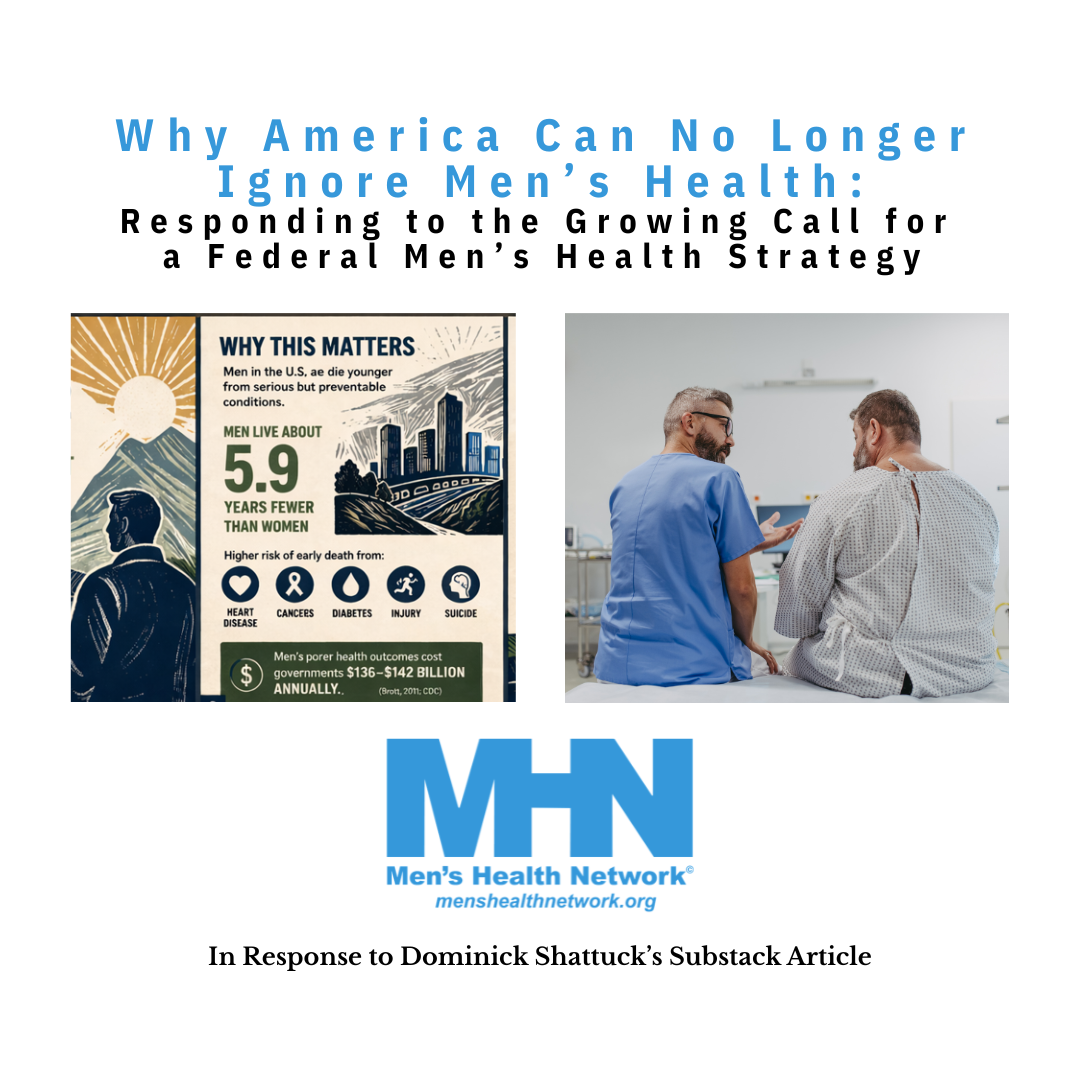
Why America Can No Longer Ignore Men’s Health: Responding to the Growing Call for a Federal Men’s Health Strategy

This response article examines the growing national conversation around men’s health policy through the lens of Dr. Dominick Shattuck’s Substack post, “Why the U.S. Needs a Federal Strategy on Men’s Health.” The blog explores the nearly six-year Lifespan Gender Gap between men and women, highlighting how preventable conditions such as heart disease, cancer, diabetes, injury, and suicide continue contributing to premature mortality among men. It discusses the structural, cultural, and healthcare-system barriers that often prevent men from engaging in preventive care early, including stigma, medical mistrust, workplace pressures, and norms surrounding self-reliance. The article also analyzes the proposed H.R. 7602 — State of Men’s Health Act, which would establish a national study on men’s health disparities and create an Office of Men’s Health within HHS to coordinate prevention and public awareness efforts. Throughout the piece, the response emphasizes that improving men’s health outcomes is not a zero-sum issue, but rather a broader public health, workforce, family, and community issue that benefits society as a whole through stronger preventive care, earlier intervention, and improved healthcare engagement.Continue reading
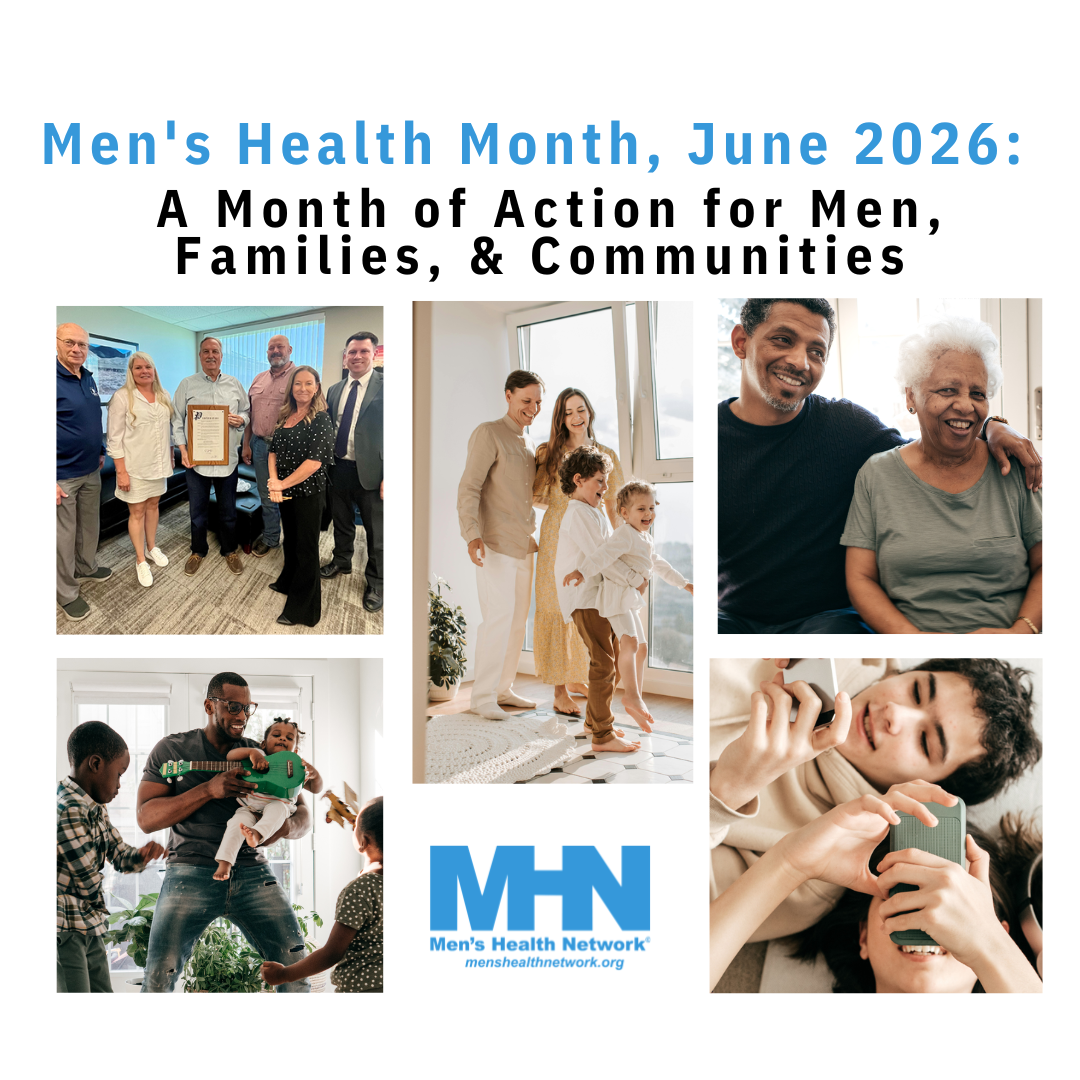
Men’s Health Month, June 2026: A Month of Action for Men, Families, & Communities

Men's Health Month 2026 brought together healthcare organizations, policymakers, community leaders, employers, volunteers, and advocates from across the country to improve the health and well-being of men and boys. From 170 official proclamations and a Congressional Men's Health Event on Capitol Hill to community fundraisers, educational initiatives, and national partnerships, this year's campaign highlighted the power of collaboration in advancing men's health. As June comes to a close, Men's Health Network reflects on the month's accomplishments and looks ahead to continuing this important work throughout the year.Continue reading

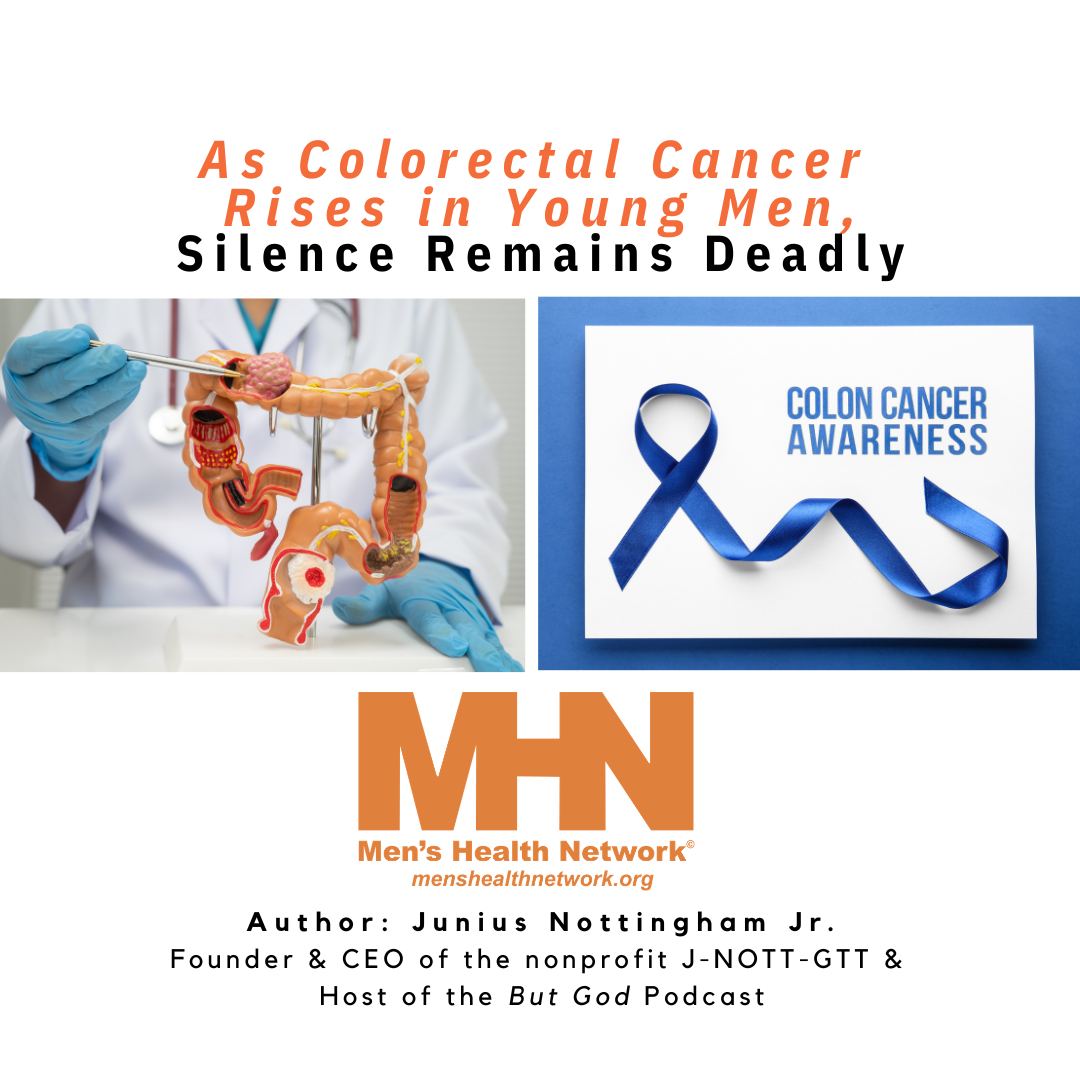
As Colorectal Cancer Rises in Young Men, Silence Remains Deadly

This personal story explores the growing rise of colorectal cancer among younger men through the experience of Junius Nottingham Jr., whose son Jeremy died from advanced colorectal cancer at just 31 years old after an undiagnosed case of Lynch syndrome. The blog highlights how stigma, silence, and cultural expectations around masculinity often prevent men from speaking up about symptoms, seeking preventive care, or advocating for genetic testing. It also raises awareness about Lynch syndrome as the most common hereditary cause of colorectal cancer and emphasizes the importance of family health history, early detection, and proactive healthcare conversations. Through personal reflection and advocacy, the author encourages men and families to connect the dots around hereditary cancer risks, seek medical evaluation early, and break the silence surrounding men’s health and cancer prevention. Continue reading

A College Perspective: Why Preventative Health Matters for Men in their 20’s

This blog highlights the importance of preventative healthcare for young men, emphasizing how stigma, busy college lifestyles, and “tough it out” mentalities often lead to neglecting routine care. It encourages building healthy habits early, prioritizing regular checkups, and fostering open conversations about men’s health to support long-term well-being. Continue reading

College Conversations: Behind the Game, Male College Athletes

This blog explores the often-overlooked mental and emotional health challenges faced by male college athletes, who are under constant pressure to perform both academically and athletically. While physical health is prioritized, cultural expectations around toughness can make it difficult for these athletes to open up about stress and mental health struggles. The piece highlights the importance of balancing physical and mental wellness, encouraging more open conversations and support systems to help athletes succeed both on and off the field. Continue reading

Testicular Cancer Awareness Month 2026: What Comes Next?

As Testicular Cancer Awareness Month concludes, the focus shifts from awareness to action—encouraging individuals to continue conversations, share resources, and support early detection efforts. Testicular cancer primarily affects young men ages 15–35, and outcomes are highly favorable when identified early, making education and communication critical. The blog emphasizes that small, everyday actions—like speaking up, checking in, or sharing information—can lead to life-saving outcomes. It also reinforces that awareness should extend beyond April, helping build long-term habits and a culture where men’s health is openly discussed and prioritized. Looking ahead, Men’s Health Month 2026 expands this momentum, promoting broader engagement across prevention, education, and community outreach, with opportunities to get involved through toolkits and educational resources.Continue reading

Testicular Cancer Awareness Month 2026: Starting the Conversation Early & Why Awareness Can’t Wait

Testicular Cancer Awareness Month emphasizes the importance of early detection and open conversations, especially for young men ages 15–35 who are most at risk. Through education and awareness, individuals are encouraged to recognize changes, speak up, and engage with healthcare earlier. Stories like Steve’s highlight how a simple conversation can lead to early detection and life-saving outcomes, reinforcing that small moments and supportive relationships play a critical role in improving men’s health.Continue reading

Testicular Cancer Awareness Month… Partners in Care: Know Your Risk. Talk with Your Family.

Testicular Cancer Awareness Month highlights the importance of early detection, education, and open conversations about a cancer that most often affects young men ages 15–35. With nearly 10,000 diagnoses each year in the United States and high survival rates when detected early, awareness and proactive health behaviors are critical. The theme, “Partners in Care: Know Your Risk. Talk with Your Family,” emphasizes the role families and communities play in supporting men’s health through communication, self-awareness, and early engagement with care.Continue reading

Masculinity, Health, and the Power of Understanding: Why Dr. Smiler’s Books Make an Impact on the Conversation

This blog highlights how Andrew Smiler brings clarity and balance to today’s conversations about masculinity through Is Masculinity Toxic?: A Primer for the 21st Century and The Masculine Self (7th Edition). Together, these books offer accessible language and evidence-informed insight into how masculine norms shape health, behavior, and relationships, moving the conversation beyond sound bites toward understanding that supports healthier outcomes for men and boys.Continue reading

Boys Falling Off the Health-Care Map: And How We Keep Them Connected

This blog, reposted from Dominick Shattuck, PhD’s Substack with permission from the author, examines new research showing how many boys quietly disengage from preventive health care during the transition from adolescence to young adulthood. Drawing on findings from the Journal of Adolescent Health and decades of men’s health research, the piece explores how masculinity norms, low perceived risk, structural barriers, and unwelcoming health systems contribute to boys “falling off the health-care map.” It highlights why this early disengagement matters for long-term health outcomes and outlines practical, evidence-informed strategies for building health systems that keep boys connected to care before preventable problems become lifelong challenges.Continue reading

Scroll to top