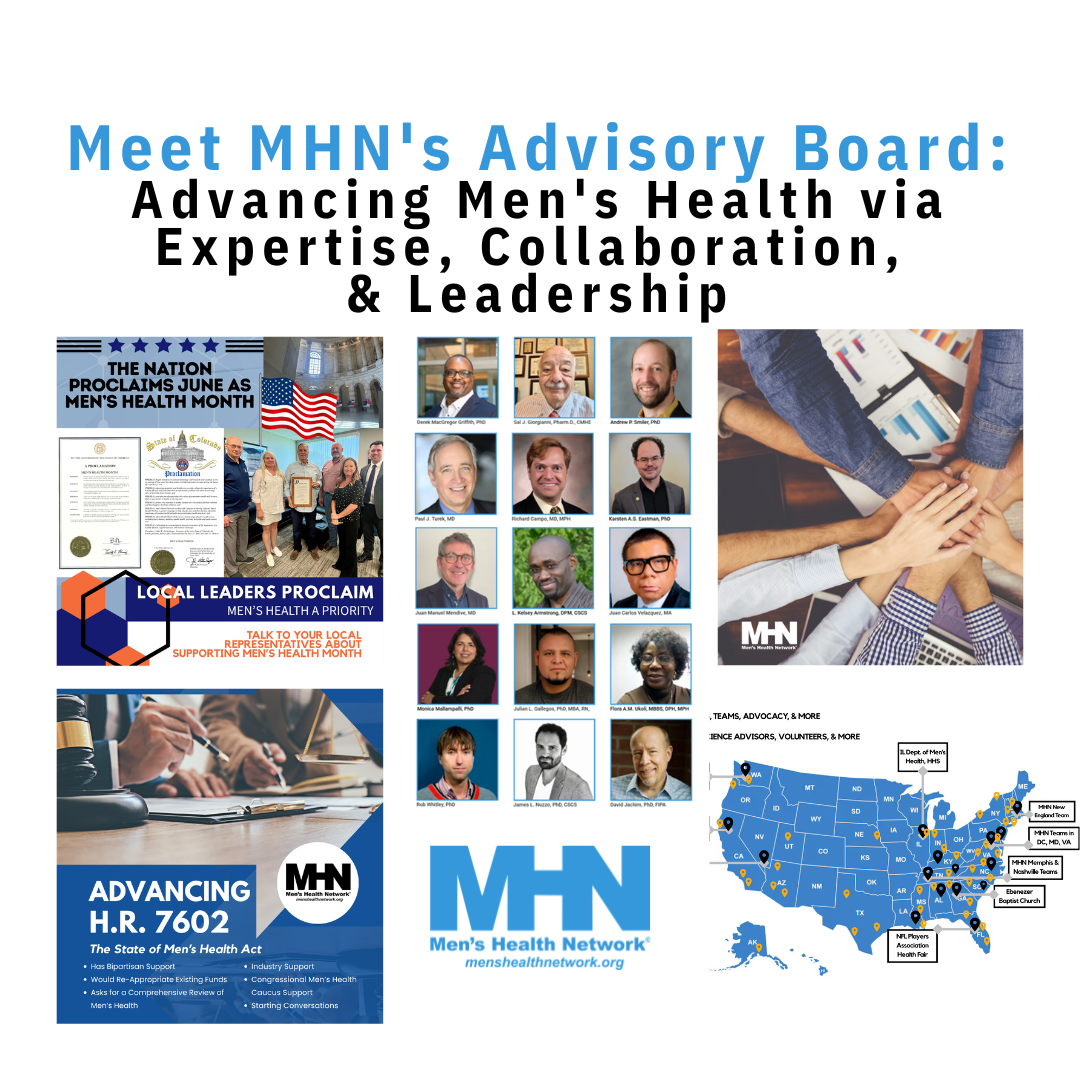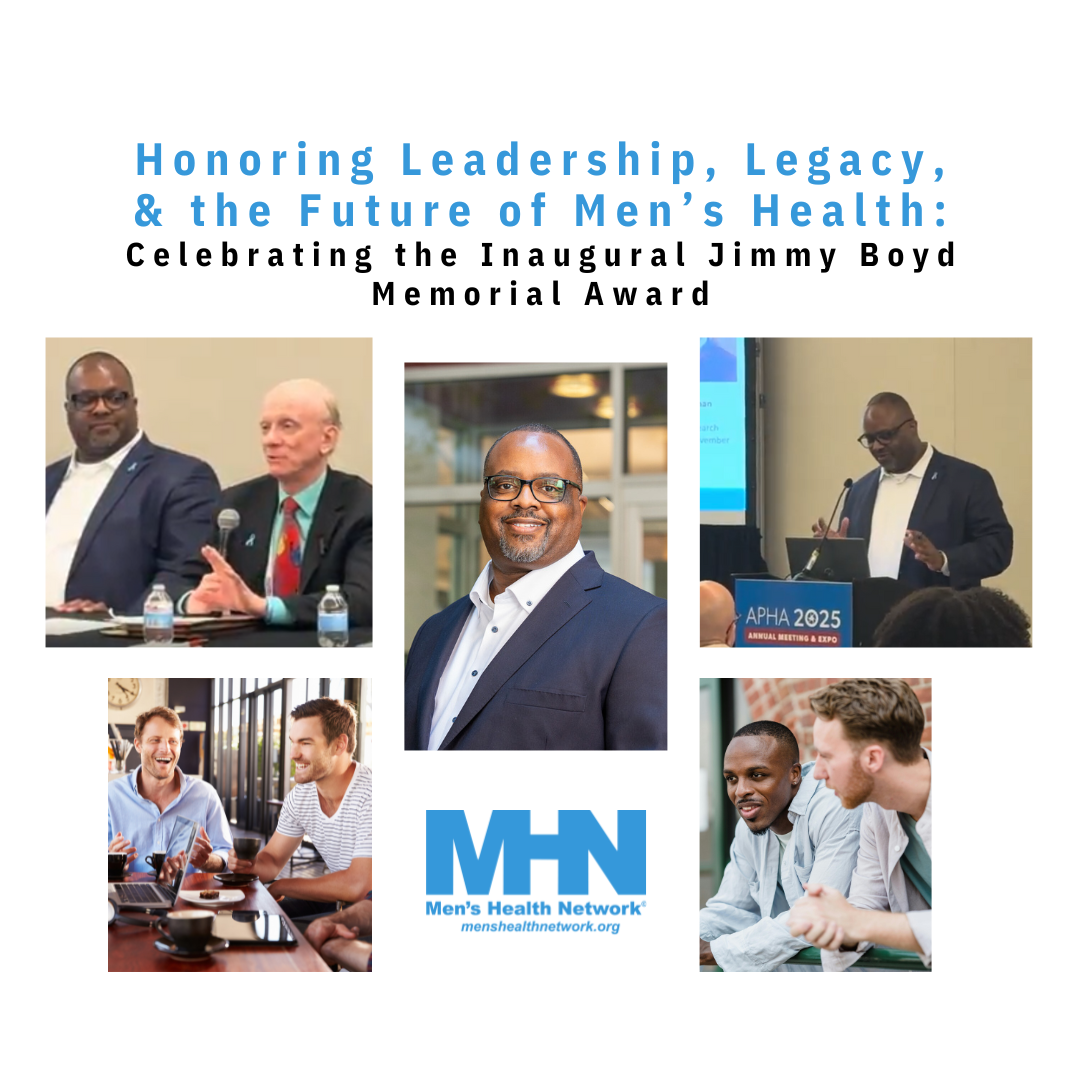
“Men’s Health Isn’t Just Personal—It’s Structural:” Why This Conversation Matters Now More Than Ever

This article highlights Dr. Dominick Shattuck’s discussion on *The Meaning of Men Podcast*, exploring how men’s health outcomes are influenced not only by personal choices but also by healthcare systems, policies, and social structures. The piece examines why many men disengage from preventive care, the importance of meeting men where they are, and strategies that can improve long-term healthcare engagement. Building on Dr. Shattuck’s insights, Men’s Health Network discusses why this conversation is especially timely amid growing awareness of the Lifespan Gender Gap and ongoing efforts to improve men’s health policy and preventive care. The article emphasizes that men’s health is not just an individual issue, but one that affects families, workplaces, communities, and society as a whole.Continue reading
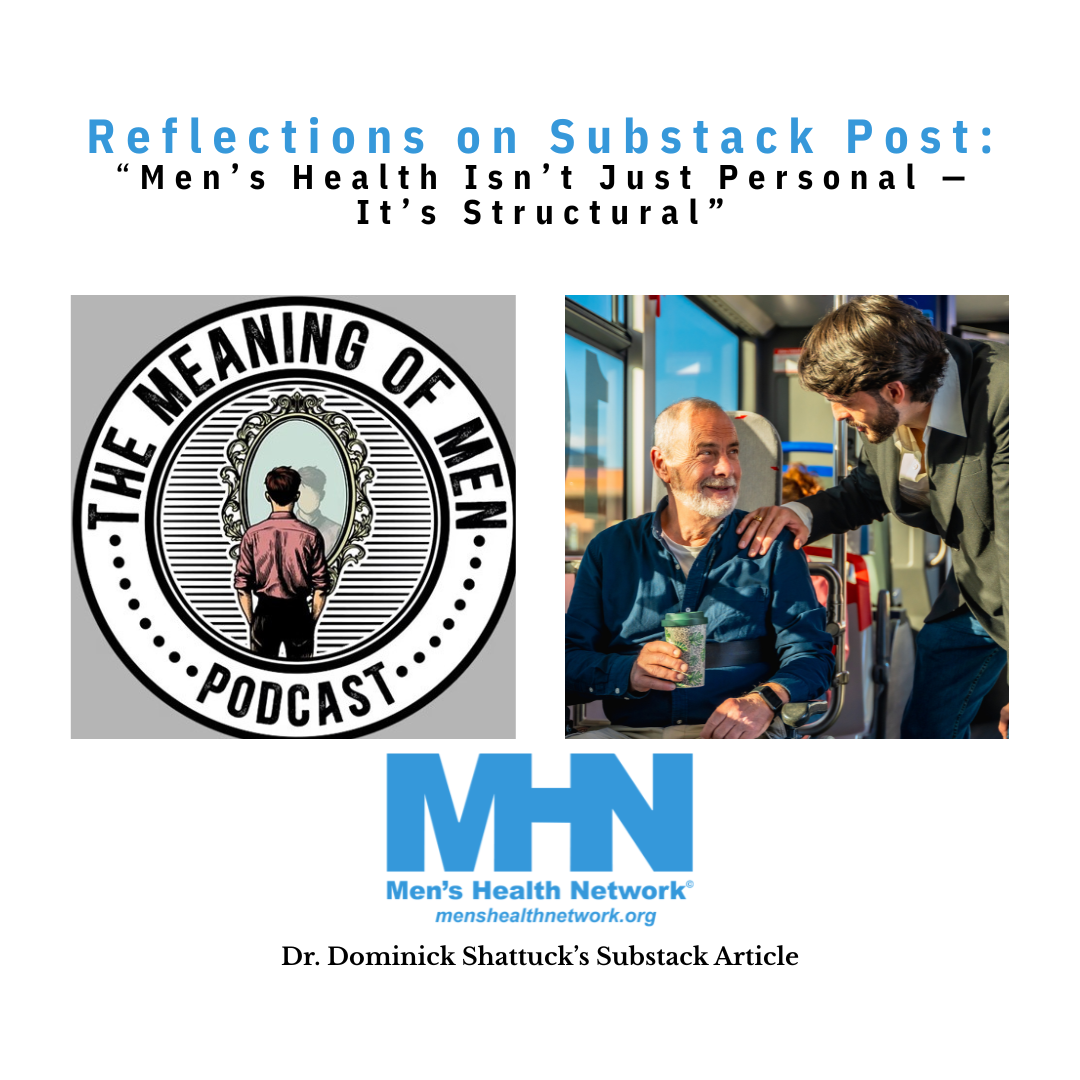
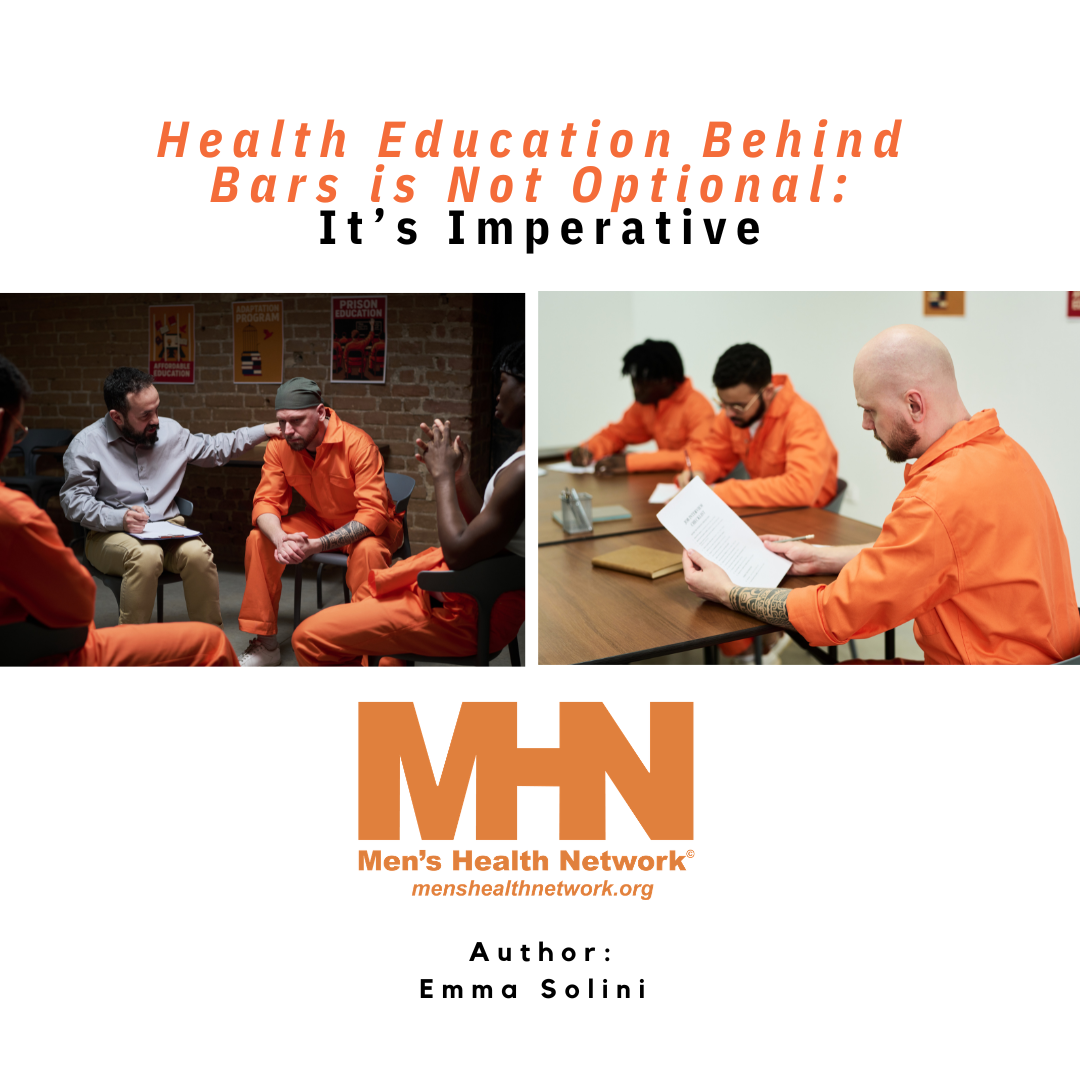
Health Education Behind Bars is Not Optional: It’s Imperative

This advocacy op-ed argues that health education and preventive care programs should be expanded within correctional facilities to address the significant health disparities experienced by incarcerated men and boys. The article highlights how improved health literacy, chronic disease management, mental health awareness, and continuity of care can lead to better health outcomes, reduced healthcare costs, and stronger community reintegration. It emphasizes that voluntary, ethically implemented health education programs are a practical public health investment that benefits both incarcerated individuals and society as a whole.Continue reading
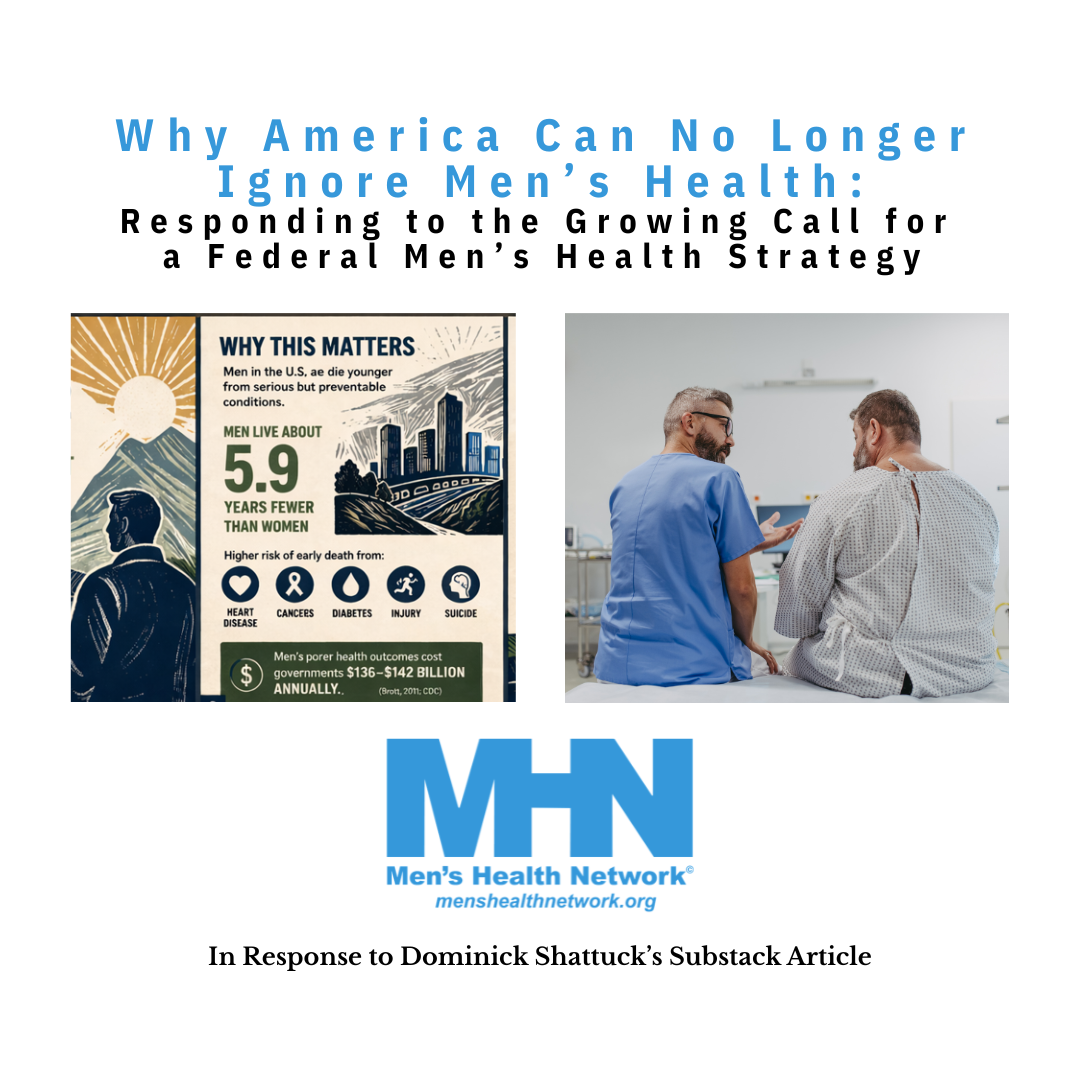
Why America Can No Longer Ignore Men’s Health: Responding to the Growing Call for a Federal Men’s Health Strategy

This response article examines the growing national conversation around men’s health policy through the lens of Dr. Dominick Shattuck’s Substack post, “Why the U.S. Needs a Federal Strategy on Men’s Health.” The blog explores the nearly six-year Lifespan Gender Gap between men and women, highlighting how preventable conditions such as heart disease, cancer, diabetes, injury, and suicide continue contributing to premature mortality among men. It discusses the structural, cultural, and healthcare-system barriers that often prevent men from engaging in preventive care early, including stigma, medical mistrust, workplace pressures, and norms surrounding self-reliance. The article also analyzes the proposed H.R. 7602 — State of Men’s Health Act, which would establish a national study on men’s health disparities and create an Office of Men’s Health within HHS to coordinate prevention and public awareness efforts. Throughout the piece, the response emphasizes that improving men’s health outcomes is not a zero-sum issue, but rather a broader public health, workforce, family, and community issue that benefits society as a whole through stronger preventive care, earlier intervention, and improved healthcare engagement.Continue reading

Meet Men’s Health Network’s Advisory Board: Advancing Men’s Health via Expertise, Collaboration, & Leadership

Men's Health Network is proud to be guided by an accomplished Advisory Board made up of physicians, researchers, public health leaders, nurses, psychologists, educators, policy experts, and advocates who share a commitment to improving the health and well-being of men, boys, and their families. Their collective expertise helps shape our educational resources, advocacy priorities, research initiatives, and community outreach efforts. From advancing men's health policy and preventive care to strengthening partnerships and expanding public awareness, our Advisory Board plays an important role in helping Men's Health Network fulfill its mission. Meet the remarkable individuals whose leadership, experience, and dedication continue to drive meaningful progress for men's health across the United States and around the world.Continue reading

Illinois Leads the Nation in Men’s Health: A Closer Look at the 2025 Men’s Health Assessment

Illinois is leading the nation in men’s health by becoming one of the only states with a dedicated Men’s Health Section within its Department of Public Health. The newly released Men’s Health Assessment 2025, authored by Andrew Lerch, DPT, PT, provides a comprehensive, data-driven look at the health challenges facing men across the state. This landmark report highlights disparities, identifies priority areas for action, and offers a blueprint for how states can integrate men’s health into public health strategy, policy, and practice.Continue reading

Honoring Leadership, Legacy, and the Future of Men’s Health: Celebrating the Inaugural Jimmy Boyd Memorial Award

Men’s Health Network commemorates a milestone moment in the men’s health movement with the presentation of the Inaugural Jimmy Boyd Memorial Award for Leadership in Men’s and Boys’ Health, established by the APHA Men’s Health Caucus. The award honors the legacy of Jimmy Boyd, former Executive Director of MHN’s Washington, D.C. office, whose decades of advocacy helped launch Men’s Health Week and later Men’s Health Month. Jimmy’s bold leadership, mentorship, and unwavering commitment to improving the lives of men and boys continue to influence the field today. The first recipient of the award, Derek M. Griffith, PhD, was recognized for his extensive contributions to men’s health research, policy, and global leadership. In his acceptance statement, Derek reflected on Jimmy’s generosity, wisdom, and guidance—qualities that shaped many of today’s men’s health advocates. Global Action on Men’s Health (GAMH) also celebrated Derek’s recognition, noting how his leadership honors Jimmy’s legacy while advancing the movement worldwide. The blog highlights MHN’s official tribute to Jimmy Boyd, emphasizing his profound impact on policy, advocacy, mentorship, and the spirit of the men’s health movement. It also reflects on the award’s significance as a symbol of continuity—from Jimmy’s foundational work to Derek’s ongoing leadership. Together, Jimmy Boyd’s legacy and Derek Griffith’s achievements underscore the compassion, dedication, and human connection that continue to propel the men’s health movement forward.Continue reading

Scroll to top