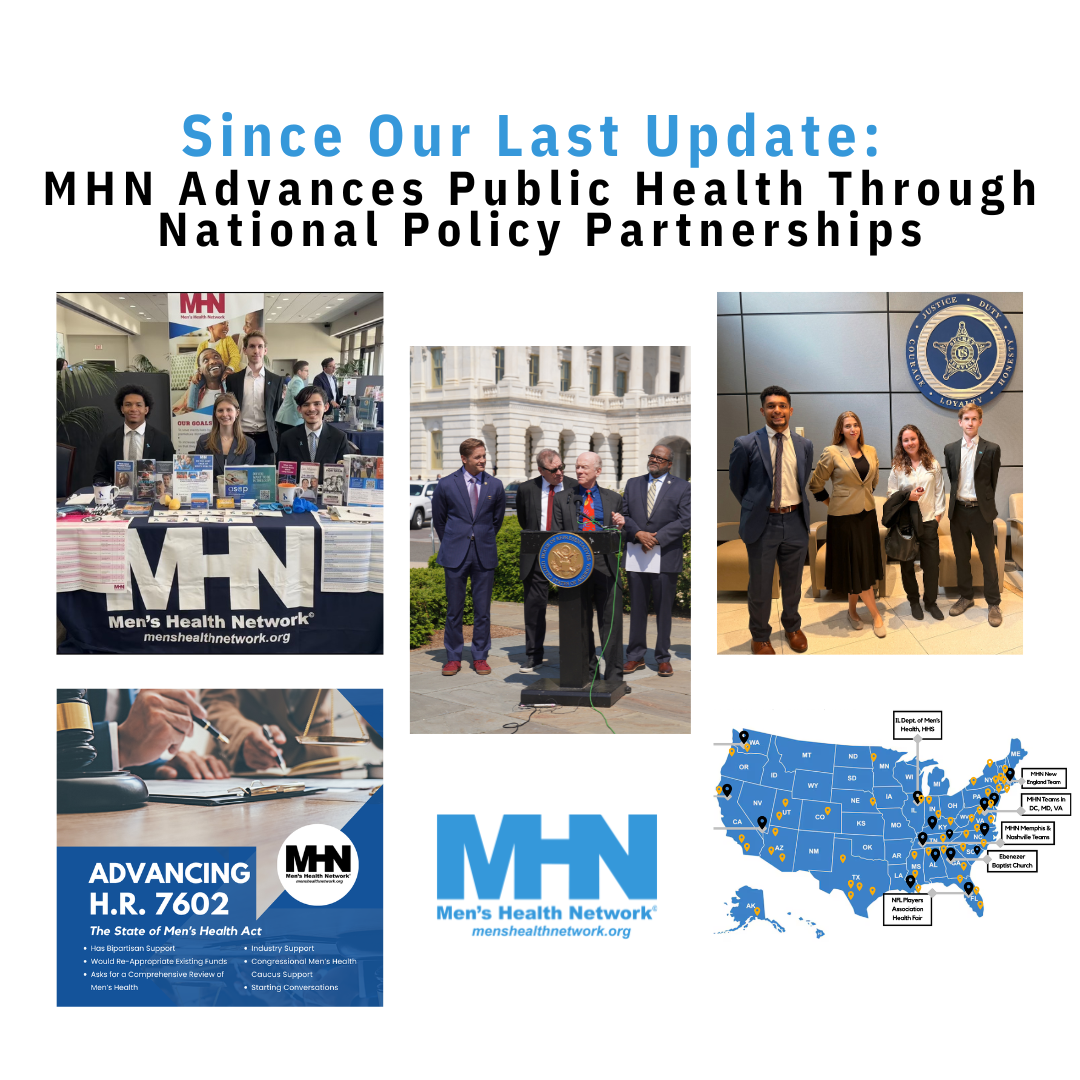
**Summary** Since our last update, Men's Health Network has continued working with national medical societies, patient advocacy organizations, researchers, and policymakers to advance public health through coalition advocacy. Recent efforts have focused on expanding access to clinical trials, protecting patients from unsafe compounded GLP-1 medications, strengthening military medical research, restoring prostate cancer research funding, and advancing the historic State of Men's Health Act. A major milestone came on July 22 with the introduction of the Senate companion to the State of Men's Health Act—the first time legislation to establish a federal Office of Men's Health has been introduced in both the House and Senate during the same Congress. Together, these initiatives reflect the growing recognition that improving the health of men and boys requires collaboration, evidence-based policy, and sustained advocacy. Continue reading
Tag: Office of Men’s Health
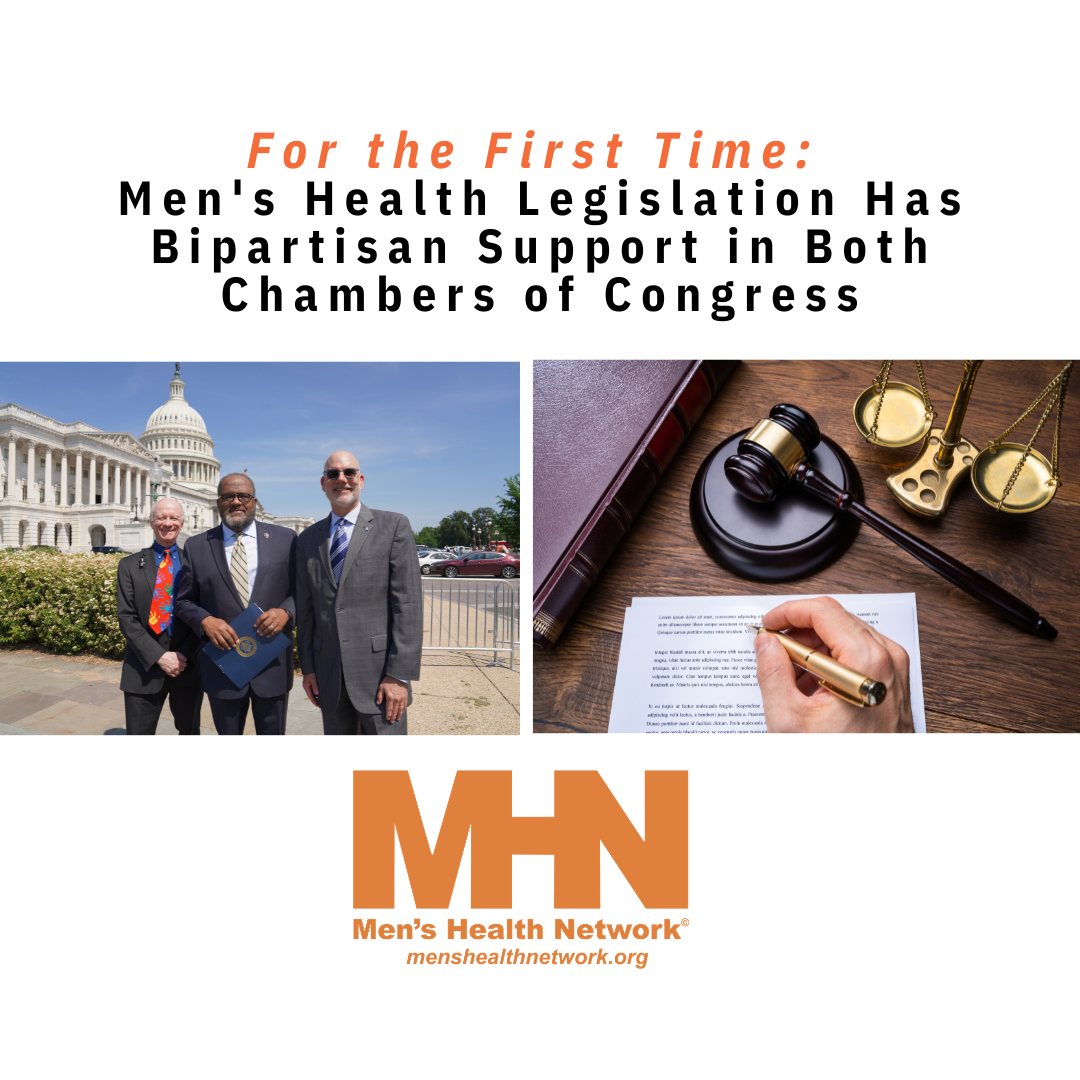
For the First Time: Men’s Health Legislation Has Bipartisan Support in Both Chambers of Congress
For the first time, bipartisan legislation to establish a federal Office of Men's Health has been introduced in both the U.S. House of Representatives and the U.S. Senate. Learn why this development represents the strongest congressional support yet for a coordinated national approach to improving the health and well-being of men and boys.Continue reading
“Men’s Health Isn’t Just Personal—It’s Structural:” Why This Conversation Matters Now More Than Ever
This article highlights Dr. Dominick Shattuck’s discussion on *The Meaning of Men Podcast*, exploring how men’s health outcomes are influenced not only by personal choices but also by healthcare systems, policies, and social structures. The piece examines why many men disengage from preventive care, the importance of meeting men where they are, and strategies that can improve long-term healthcare engagement. Building on Dr. Shattuck’s insights, Men’s Health Network discusses why this conversation is especially timely amid growing awareness of the Lifespan Gender Gap and ongoing efforts to improve men’s health policy and preventive care. The article emphasizes that men’s health is not just an individual issue, but one that affects families, workplaces, communities, and society as a whole.Continue reading
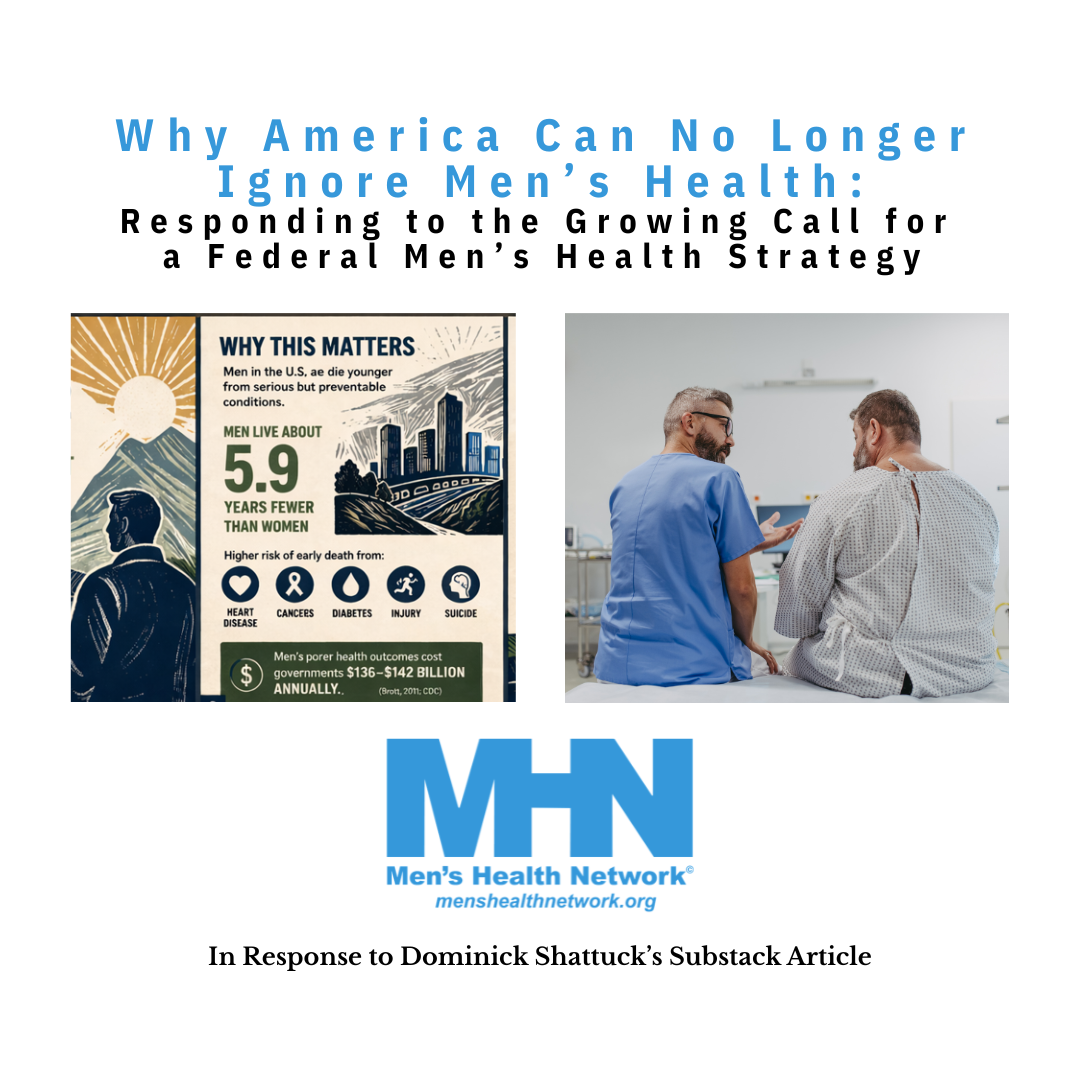
Why America Can No Longer Ignore Men’s Health: Responding to the Growing Call for a Federal Men’s Health Strategy
This response article examines the growing national conversation around men’s health policy through the lens of Dr. Dominick Shattuck’s Substack post, “Why the U.S. Needs a Federal Strategy on Men’s Health.” The blog explores the nearly six-year Lifespan Gender Gap between men and women, highlighting how preventable conditions such as heart disease, cancer, diabetes, injury, and suicide continue contributing to premature mortality among men. It discusses the structural, cultural, and healthcare-system barriers that often prevent men from engaging in preventive care early, including stigma, medical mistrust, workplace pressures, and norms surrounding self-reliance. The article also analyzes the proposed H.R. 7602 — State of Men’s Health Act, which would establish a national study on men’s health disparities and create an Office of Men’s Health within HHS to coordinate prevention and public awareness efforts. Throughout the piece, the response emphasizes that improving men’s health outcomes is not a zero-sum issue, but rather a broader public health, workforce, family, and community issue that benefits society as a whole through stronger preventive care, earlier intervention, and improved healthcare engagement.Continue reading
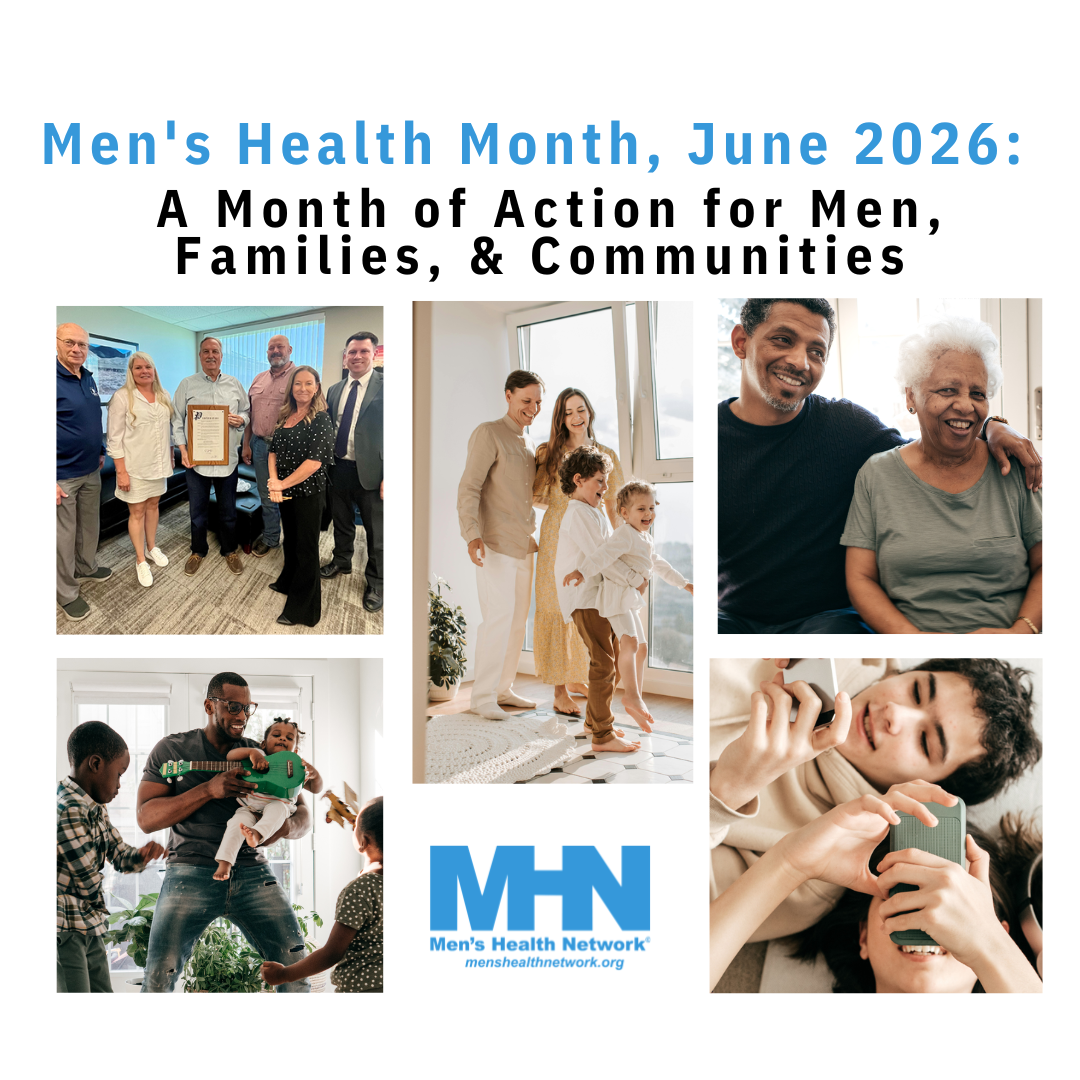
Men’s Health Month, June 2026: A Month of Action for Men, Families, & Communities
Men's Health Month 2026 brought together healthcare organizations, policymakers, community leaders, employers, volunteers, and advocates from across the country to improve the health and well-being of men and boys. From 170 official proclamations and a Congressional Men's Health Event on Capitol Hill to community fundraisers, educational initiatives, and national partnerships, this year's campaign highlighted the power of collaboration in advancing men's health. As June comes to a close, Men's Health Network reflects on the month's accomplishments and looks ahead to continuing this important work throughout the year.Continue reading
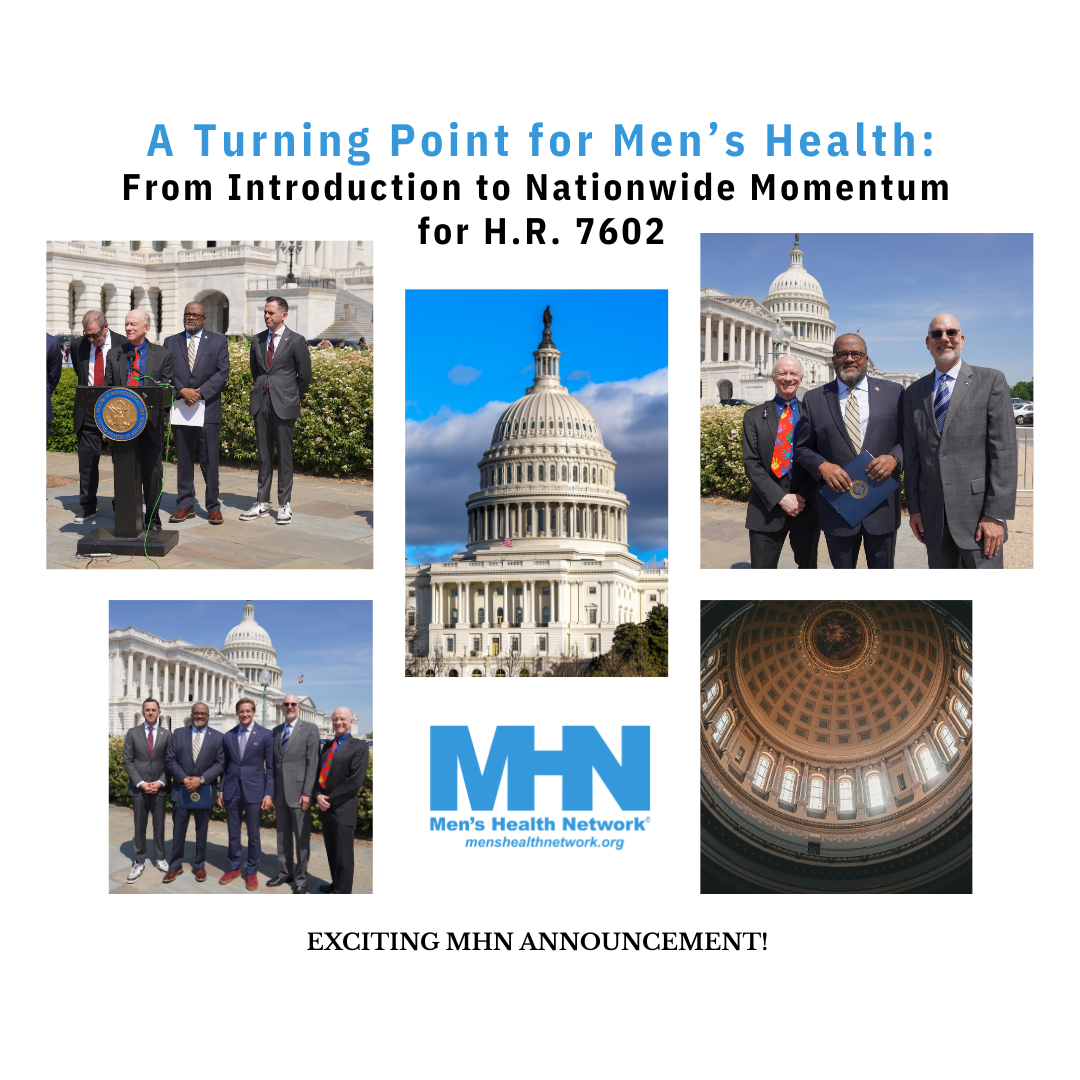
A Turning Point for Men’s Health: From Introduction to Nationwide Momentum for H.R. 7602
A historic shift is underway in men’s health policy. This blog explores the introduction of the State of Men’s Health Act (H.R. 7602), the growing bipartisan and national medical support behind it, and the landmark recognition of Men’s Health Nursing as a specialty—marking a pivotal moment in strengthening federal coordination, clinical infrastructure, and prevention efforts for men and boys across the United States.Continue reading
Prostate Cancer Awareness Month 2025: Building Empathy, Spreading Awareness, Saving Lives
September is Prostate Cancer Awareness Month, and Men’s Health Network is leading the 2025 campaign, “Bring Empathy Back.” With 1 in 8 men facing prostate cancer in their lifetime, early detection and prevention are critical. MHN offers a free digital toolkit filled with resources to help families, workplaces, and communities spread awareness, host events, and encourage screenings. Join us by downloading the toolkit, becoming a Men’s Health Ambassador, subscribing to our newsletter, or donating to support lifesaving men’s health programs.Continue reading
Native Americans, Alaskan Natives have high COVID-19 risk
COVID-19 is hitting some communities hard, and a cluster of factors puts Native Americans at especially high risk. Among those factors: multi-generational families living under one roof and, in some cases, limited access to running water or power, says Jessica Atwell, infectious disease epidemiologist with the Johns Hopkins Center for American Indian Health. Underlying health...Continue reading
The Business Case for an Office of Men’s Health
Below is an excerpt from a forthcoming study that I authored, which investigates the federal costs associated with excess disease burden in men in an attempt to substantiate the need for a federal Office of Men’s Health. Despite the increased risk of disease and injury, the health of men is oft an overlooked subject. Men...Continue reading