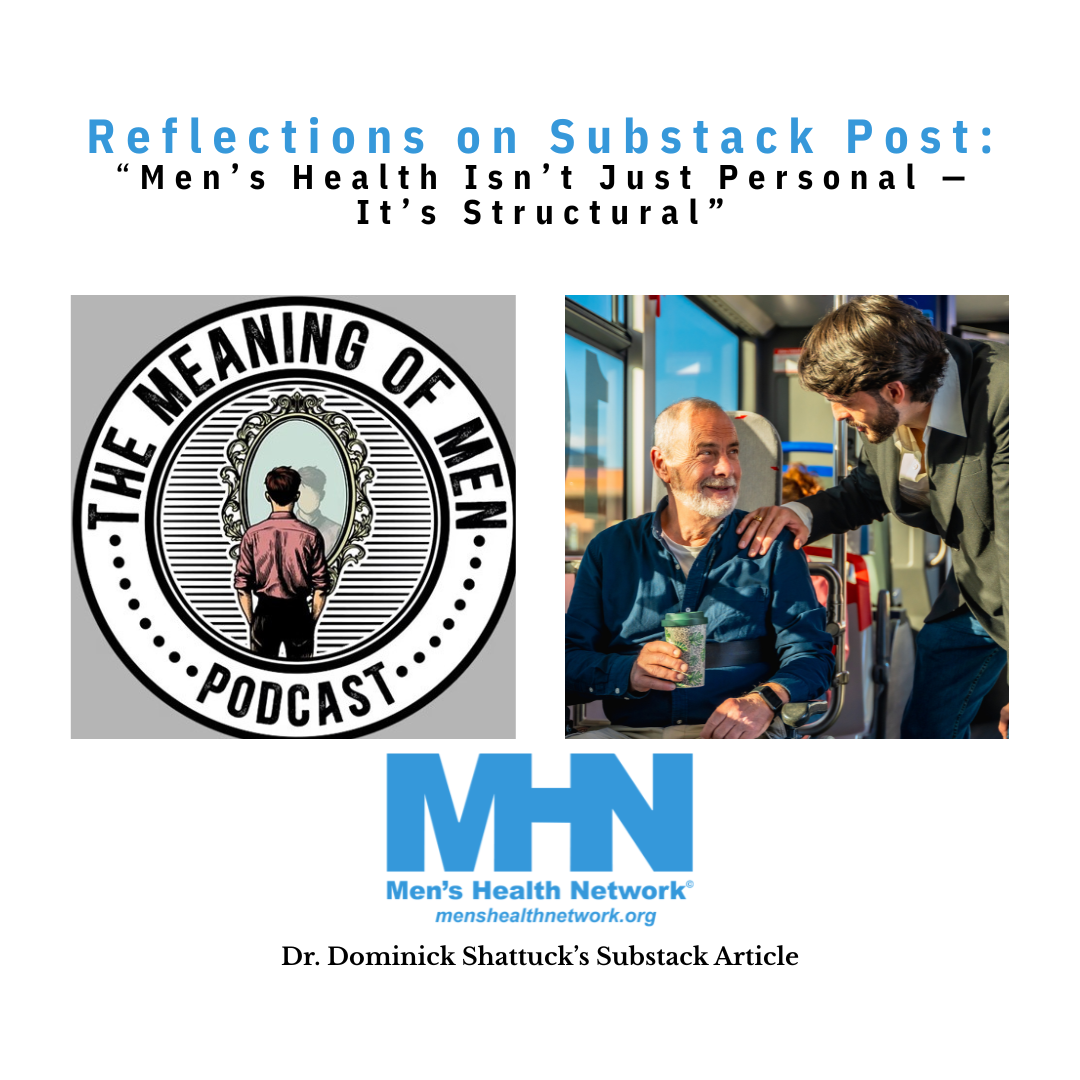
This article highlights Dr. Dominick Shattuck’s discussion on *The Meaning of Men Podcast*, exploring how men’s health outcomes are influenced not only by personal choices but also by healthcare systems, policies, and social structures. The piece examines why many men disengage from preventive care, the importance of meeting men where they are, and strategies that can improve long-term healthcare engagement. Building on Dr. Shattuck’s insights, Men’s Health Network discusses why this conversation is especially timely amid growing awareness of the Lifespan Gender Gap and ongoing efforts to improve men’s health policy and preventive care. The article emphasizes that men’s health is not just an individual issue, but one that affects families, workplaces, communities, and society as a whole.Continue reading
Tag: preventive screenings
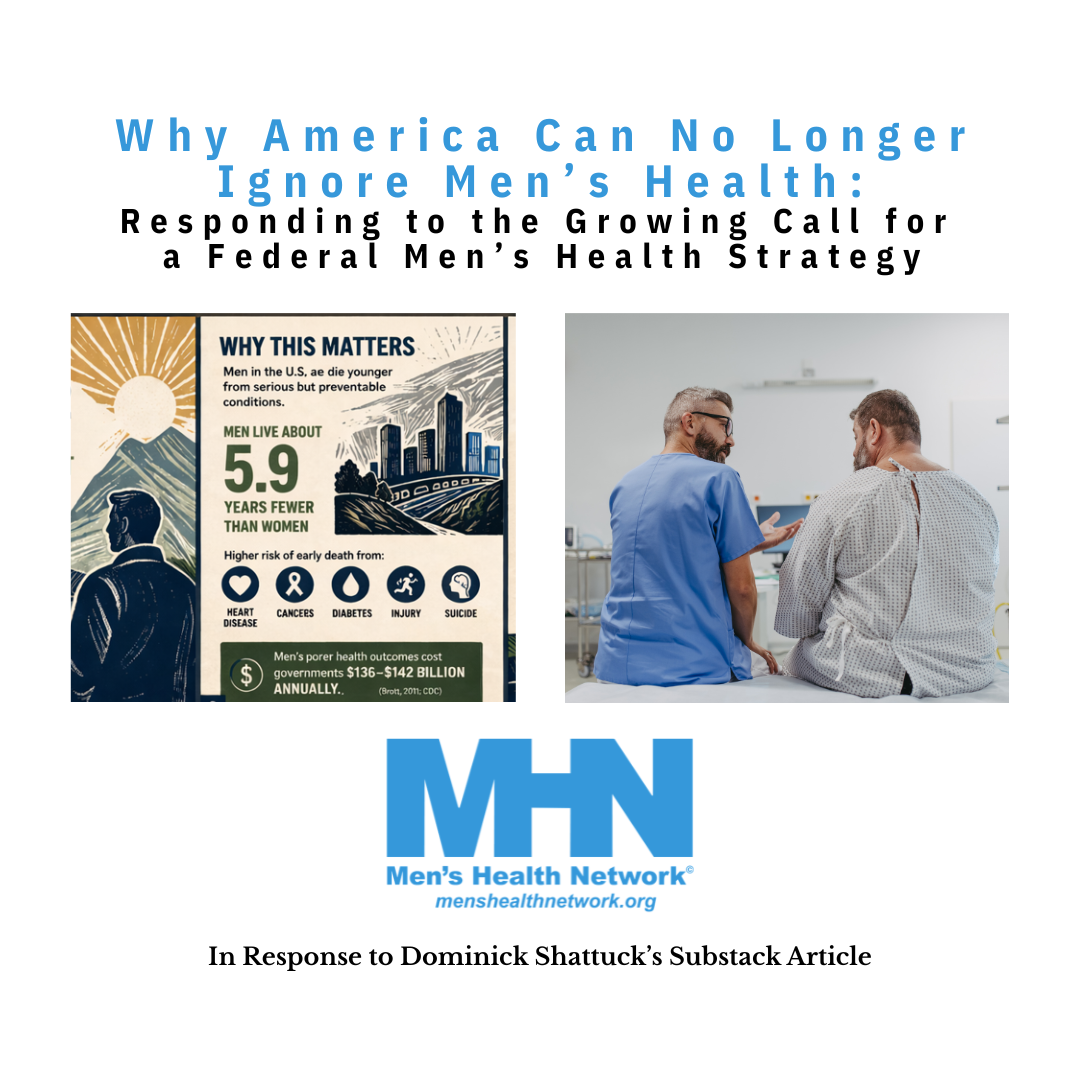
Why America Can No Longer Ignore Men’s Health: Responding to the Growing Call for a Federal Men’s Health Strategy
This response article examines the growing national conversation around men’s health policy through the lens of Dr. Dominick Shattuck’s Substack post, “Why the U.S. Needs a Federal Strategy on Men’s Health.” The blog explores the nearly six-year Lifespan Gender Gap between men and women, highlighting how preventable conditions such as heart disease, cancer, diabetes, injury, and suicide continue contributing to premature mortality among men. It discusses the structural, cultural, and healthcare-system barriers that often prevent men from engaging in preventive care early, including stigma, medical mistrust, workplace pressures, and norms surrounding self-reliance. The article also analyzes the proposed H.R. 7602 — State of Men’s Health Act, which would establish a national study on men’s health disparities and create an Office of Men’s Health within HHS to coordinate prevention and public awareness efforts. Throughout the piece, the response emphasizes that improving men’s health outcomes is not a zero-sum issue, but rather a broader public health, workforce, family, and community issue that benefits society as a whole through stronger preventive care, earlier intervention, and improved healthcare engagement.Continue reading
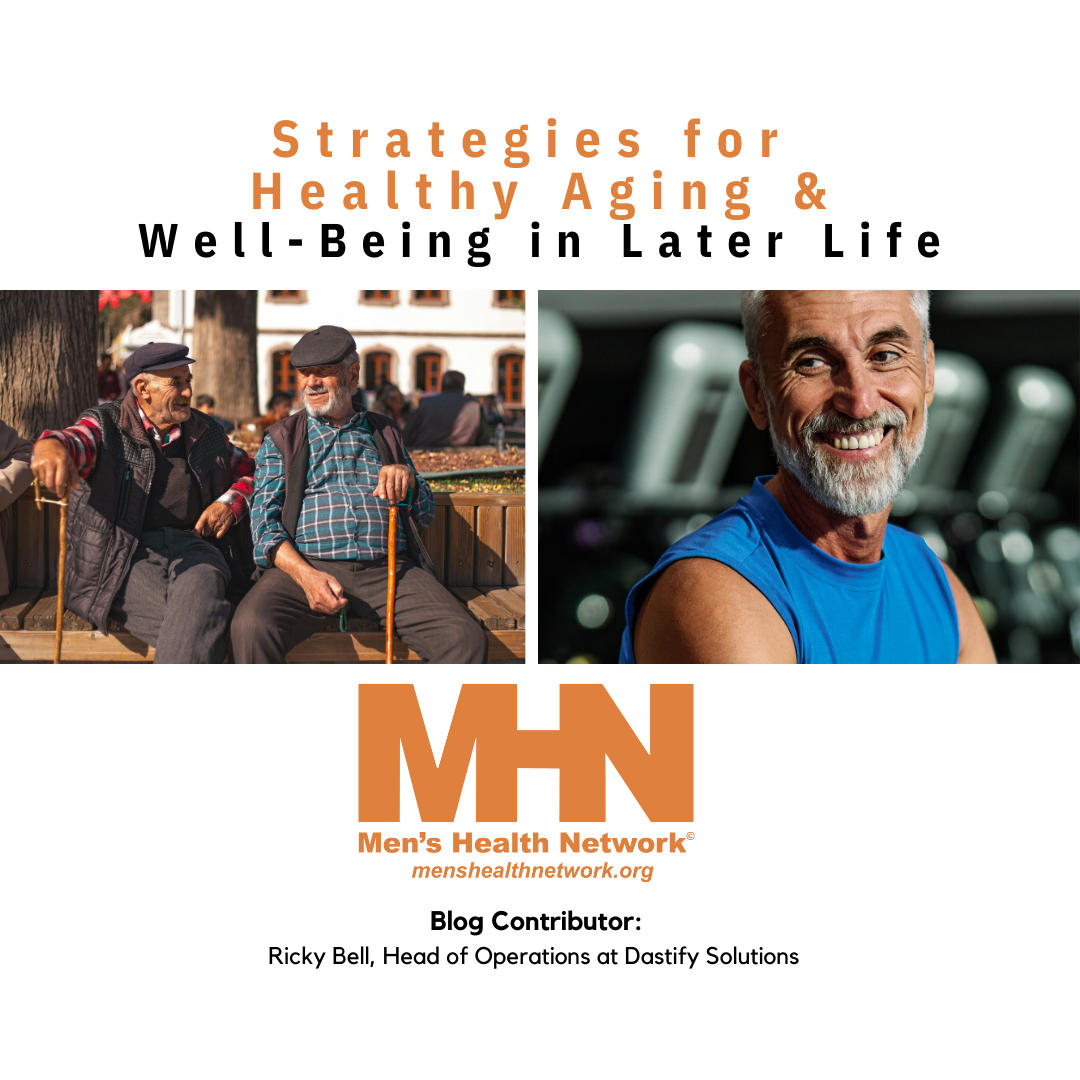
Strategies for Healthy Aging and Well-Being in Later Life
The blog reframes aging as a stage of opportunity rather than decline, emphasizing that many physical, cognitive, and emotional challenges associated with later life can be prevented or managed through intentional, healthy behaviors. It highlights the importance of balanced nutrition, regular physical activity, and preventive healthcare to maintain strength, mobility, and independence, alongside lifelong learning, social connection, and stress management to support cognitive and mental well-being. The article also stresses emotional resilience through purpose, relationships, gratitude, and adaptability, noting that technology and community engagement can further enhance health, connection, and autonomy. Overall, it argues that healthy aging is holistic and proactive, focusing on adding quality and fulfillment to life, not just years.Continue reading