For the First Time:
Men’s Health Legislation Has Bipartisan Support in Both Chambers of Congress
On July 22, 2026, the conversation surrounding men’s health reached a point that would have been difficult to imagine just a few years ago.
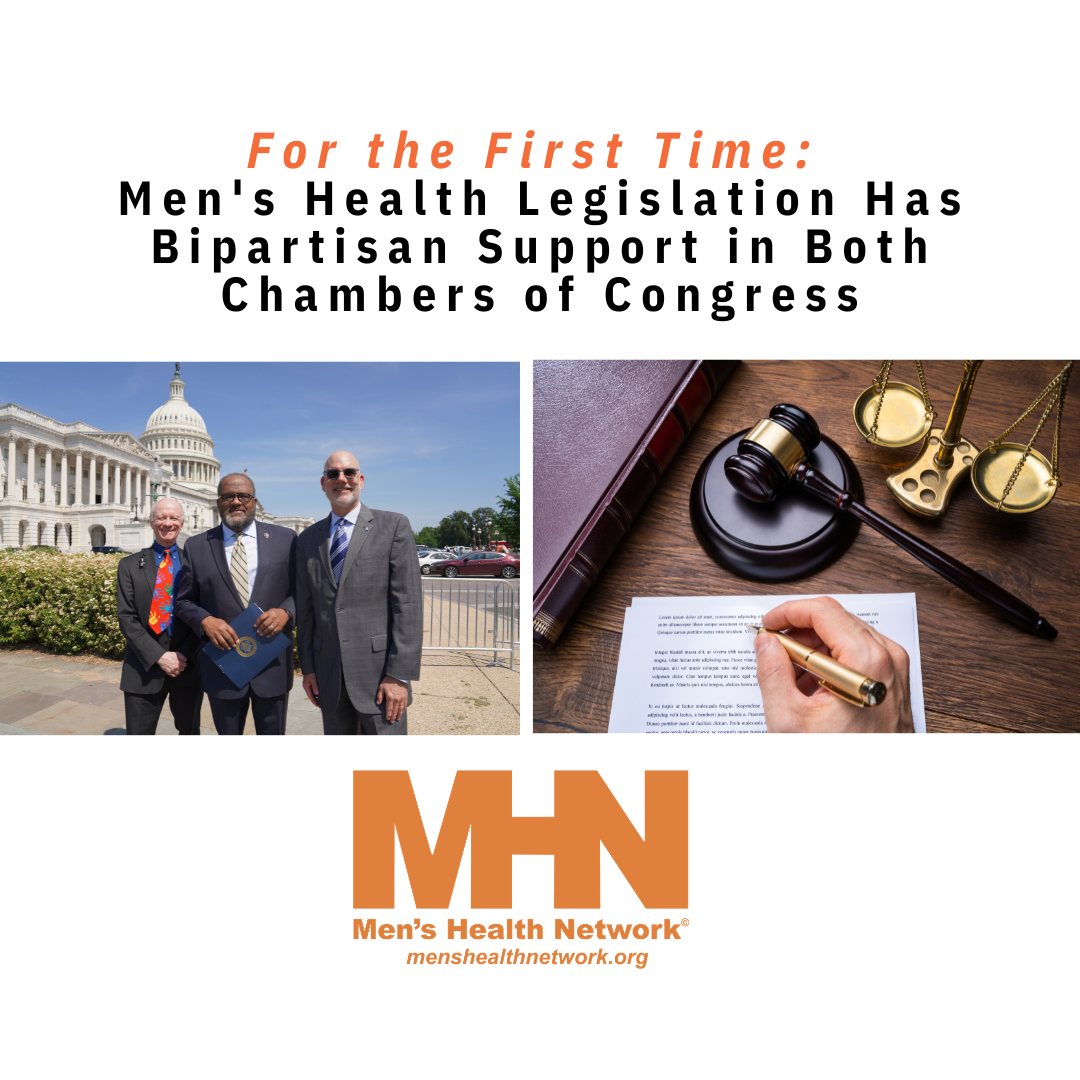
The State of Men’s Health Act was introduced in the United States Senate by Senators Ruben Gallego (D-AZ) and Roger Marshall, M.D. (R-KY), creating bipartisan companion legislation to the bill already introduced in the U.S. House of Representatives by Representatives Troy A. Carter, Sr. (D-LA) and Greg Murphy, M.D. (R-NC).
For the first time, legislation calling for a federal Office of Men’s Health has been introduced in both chambers of Congress with bipartisan support.
That distinction matters.
While no legislation becomes law simply because it has been introduced, having companion bills in both the House and Senate represents the strongest congressional position ever achieved for a coordinated national approach to improving the health of men and boys. It demonstrates that lawmakers from both political parties and both chambers recognize that men’s health deserves greater federal attention.
For Men’s Health Network, this represents the culmination of more than three decades of advocacy, education, and relationship building. Since 1992, MHN has worked with policymakers, healthcare professionals, researchers, employers, and community organizations to elevate men’s health as a public health priority. Today’s announcement reflects not only years of advocacy by MHN, but also the growing recognition across the healthcare community that better health outcomes for men strengthen families, workplaces, and communities.
Why Both Chambers Matter
Many Americans are familiar with the House of Representatives and the Senate, but fewer understand why introducing legislation in both chambers is so significant.
Every federal law must ultimately pass both the House and the Senate before it can be signed by the President. Introducing companion legislation in each chamber allows lawmakers to move the proposal through committee review, gather bipartisan support, and build consensus from two directions simultaneously.
In other words, this is no longer simply a House proposal or a Senate proposal, it is now a congressional proposal being considered by both chambers.
That distinction provides a stronger foundation for future action than any previous federal effort focused specifically on men’s health.
A Federal Strategy That Has Never Existed
Despite well-documented disparities in health outcomes, the United States has never established a permanent Office of Men’s Health within the Department of Health and Human Services.
The State of Men’s Health Act seeks to change that.
The legislation would first direct the U.S. Government Accountability Office (GAO) to conduct a comprehensive assessment of men’s health in the United States. That review would examine existing federal programs, identify gaps in research and services, and evaluate opportunities to improve coordination across agencies.
The Act would also establish an Office of Men’s Health within HHS to coordinate federal efforts related to men’s health education, prevention, research, and public awareness.
Rather than creating a new healthcare entitlement or expanding federal regulation, the proposal is designed to improve coordination, strengthen public education, identify unmet needs, and ensure that existing resources are working together effectively.
Why This Matters
The need for a coordinated national approach is difficult to ignore.
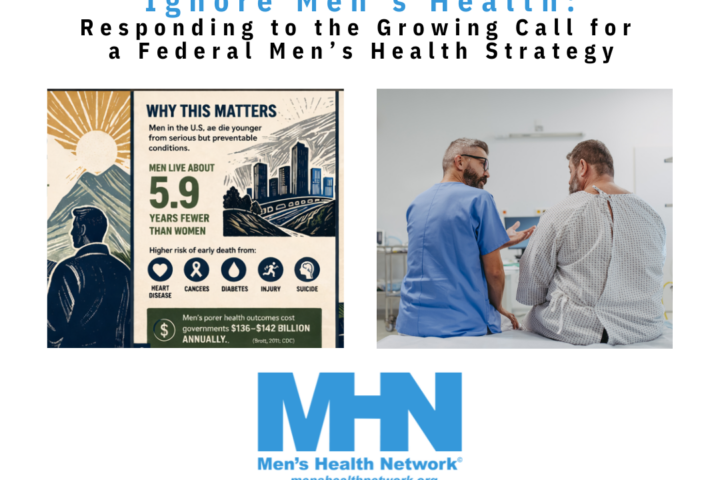
Across nearly every stage of life, men experience poorer health outcomes than women. Men have shorter life expectancies and are more likely to die from many of the nation’s leading causes of death, including heart disease, cancer, suicide, accidental injuries, and substance use disorders.
They are less likely to have a regular source of primary care, less likely to seek preventive services, and more likely to delay medical attention until disease has progressed.
The consequences extend well beyond individual patients.
When men die prematurely or live with preventable illness, families lose fathers, husbands, sons, brothers, and caregivers. Employers lose experienced workers. Communities lose volunteers, mentors, coaches, taxpayers, and civic leaders. Improving men’s health is therefore not simply a men’s issue, it is a family issue, an economic issue, and a public health issue.
Building on Proven Success
The proposal also reflects a practical approach to federal public health.
Federal Offices of Women’s Health have demonstrated the value of coordinating research, education, and public awareness around specific population health needs. Those offices have helped improve health outcomes through collaboration across agencies and partnerships with healthcare organizations.
The State of Men’s Health Act follows that successful framework while recognizing the distinct health challenges faced by men and boys.
As Ronald Henry, President of Men’s Health Network, noted:
“The Men’s Health Network is thrilled to support the introduction of the State of Men’s Health Act in the Senate. We know that the existing Federal offices of women’s health have done important work to enhance the lifespans and quality of life for women. We look at the advances in women’s longevity not in competition but in admiration. The gains in women’s longevity give hope for similar advances for men. Too many American men are still dying too young and that hurts all of us. Not only the men themselves, but also the wives, daughters, sons and sisters who love them, the employers who lose productive workers, and the communities which lose the men’s contributions as taxpayers and as community builders. We are very grateful for the Senate’s introduction of the State of Men’s Health Act and look forward to broad bipartisan support for prompt passage.”
What Comes Next?
The House and Senate bills will now proceed through the legislative process, including committee review and consideration by lawmakers.
While there is still work to be done before the proposal can become law, the conversation has changed. For the first time, lawmakers in both chambers of Congress have introduced bipartisan legislation focused on establishing a coordinated federal strategy for improving men’s health.
That is a meaningful development, not because it guarantees a particular outcome, but because it reflects a growing understanding that the health of men and boys deserves sustained national attention.
For Men’s Health Network, this is another step in a mission that began more than thirty years ago. For families, healthcare professionals, and advocates across the country, it represents an opportunity to continue building support for policies that help men live longer, healthier lives.