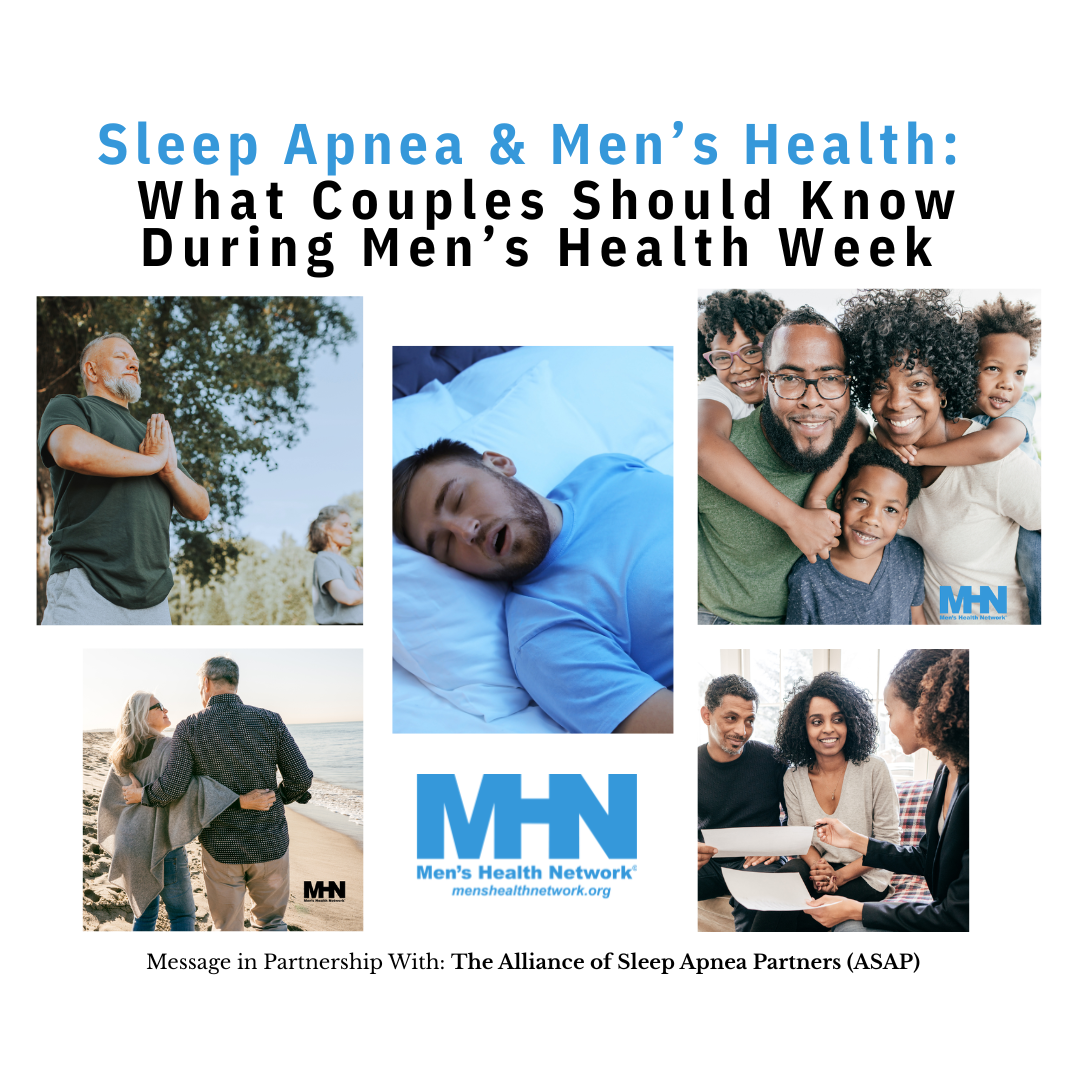
Sleep Apnea & Men’s Health:
What Couples Should Know During Men’s Health Week
Message in Partnership With:
The Alliance of Sleep Apnea Partners (ASAP)
This week, Men’s Health Week 2026 (June 15–21) marks the special period where attention is drawn to all issues men’s health. It cannot be understated that the importance of preventive care, sleep health, mental health, and overall well-being is evident, and pulling that out, one of our partners the Alliance of Sleep Apnea Partners (ASAP), alongside us at Men’s Health Network, are encouraging men and families to pay closer attention to one of the most overlooked health conditions affecting households nationwide: sleep apnea.
If your partner says you snore loudly, stop breathing during sleep, wake up gasping, or seem exhausted even after a full night in bed, it may be more than a nuisance—it could be Obstructive Sleep Apnea (OSA), a serious but treatable health condition connected to cardiovascular health, mental health, energy levels, productivity, and long-term quality of life.
Why Sleep Apnea Matters During Men’s Health Week 2026
Men’s Health Week 2026 takes place during Men’s Health Month annually and serves as an important reminder that sleep health is a critical part of men’s overall health.
Too often, sleep apnea is dismissed as “just snoring,” poor sleep habits, stress, or aging. But loud snoring, breathing pauses, waking up tired despite sleep, restless sleep, and chronic daytime fatigue can all point to a serious sleep disorder that deserves medical attention.
Sleep apnea can contribute to:
- Chronic fatigue and low energy
- Difficulty concentrating
- Mood and emotional health challenges
- Cardiovascular complications
- Reduced workplace performance and productivity
- Strain on relationships and household well-being
- Increased risk for additional long-term health concerns
Men are often encouraged to “push through” exhaustion or ignore symptoms, but untreated sleep apnea can significantly affect both physical and emotional health over time.
Key Takeaways
- Sleep apnea affects millions of men and families nationwide
- Bed partners are often the first to notice signs of sleep apnea
- Sleep apnea impacts sleep quality, energy, mood, and relationships
- Untreated sleep apnea can affect both physical and mental health
- Men’s Health Week 2026 is an opportunity to prioritize sleep health and preventive care
- Early diagnosis and treatment can significantly improve quality of life
How Sleep Apnea Affects Couples and Families
Sleep apnea rarely affects only one person in a household.
“Any sleep disruption of one person in a sleeping couple can affect the sleep of the other,” said Dr. Jennifer Martin, Ph.D., a professor at Florida International University’s College of Medicine. In sleep apnea, the disruption may come from snoring, tossing and turning, repeated awakenings, or a partner nudging someone to change position during the night.
That means sleep apnea can affect not only the person experiencing symptoms, but also their partner’s sleep quality, stress levels, mood, and daily functioning. A partner repeatedly awakened throughout the night may begin experiencing exhaustion and disrupted sleep as well.
Poor sleep can also impact emotional regulation, communication, stress management, and relationships. During Men’s Health Week 2026, ASAP and MHN encourage families to recognize sleep apnea as both a personal health issue and a household health issue.
Signs of Sleep Apnea Your Partner May Notice First
Often, a bed partner notices the warning signs of sleep apnea before the individual experiencing symptoms does.
One of the most important signs of sleep apnea your partner can notice is a pause in breathing during sleep. “If your partner stops breathing while they’re asleep at night, the chance that they have sleep apnea is very high,” Dr. Martin explained.
Additional warning signs may include:
- Loud or worsening snoring
- Breathing pauses during sleep
- Gasping or choking sounds at night
- Restless sleep or constant repositioning
- Frequent awakenings
- Waking up exhausted despite sleeping for several hours
- Daytime sleepiness or low energy
- Irritability, mood changes, or difficulty concentrating
Snoring alone does not always mean sleep apnea, but snoring combined with breathing interruptions, exhaustion, or daytime fatigue should not be ignored.
Sleep Apnea, Men’s Health, Hypertension, & Erectile Dysfunction
During Men’s Health Week 2026, ASAP and MHN also want to raise awareness around several major men’s health conditions closely connected to untreated sleep apnea, including hypertension (high blood pressure) and erectile dysfunction (ED).
Too often, men view symptoms like exhaustion, poor sleep, erectile dysfunction, low energy, headaches, mood changes, or difficulty concentrating as isolated issues, normal aging, stress, or simply “part of getting older.” However, sleep apnea can affect multiple systems throughout the body and may contribute to a much larger pattern of ongoing health concerns.
Obstructive sleep apnea (OSA) repeatedly interrupts breathing throughout the night, reducing oxygen levels and placing ongoing stress on the cardiovascular system. Over time, these repeated disruptions can contribute to elevated blood pressure, increased cardiovascular strain, inflammation, and reduced overall sleep quality.
Hypertension is one of the most common conditions associated with untreated sleep apnea. Many individuals living with sleep apnea experience blood pressure that remains difficult to control, particularly if the underlying sleep disorder has not yet been diagnosed or treated. Sleep apnea may also increase long-term risks connected to cardiovascular disease, stroke, and other chronic health concerns.
Sleep apnea is also increasingly connected to conversations around erectile dysfunction and men’s sexual health. Poor sleep quality, oxygen disruption, fatigue, stress, hormonal impacts, and cardiovascular strain can all affect sexual health and overall quality of life. In many cases, erectile dysfunction may serve as an early warning sign that something broader is happening with cardiovascular or sleep health.
Unfortunately, many men may feel uncomfortable discussing either sleep issues or erectile dysfunction with healthcare providers due to embarrassment, stigma, or fear of judgment. Men are often encouraged to “push through” symptoms quietly rather than seek preventive care or ask questions early.
That is one reason why IMHW 2026 is such an important awareness opportunity.
While Men’s Health Week is observed June 15–21, it does reside within the larger Men’s Health Month awareness period, which, of course, was designated to create space for conversations around important men’s health topics that are often overlooked, minimized, or avoided entirely.
Sleep health, cardiovascular health, mental health, sexual health, preventive care, and emotional well-being are all deeply interconnected.
ASAP and MHN encourage men and families to recognize that symptoms such as chronic exhaustion, loud snoring, breathing pauses, hypertension, daytime fatigue, or erectile dysfunction should not simply be ignored or normalized. Early conversations, preventive screenings, sleep evaluations, and proactive healthcare engagement can help improve long-term health outcomes, quality of life, relationships, and overall well-being.
Seeking help is not a weakness.
Prioritizing health helps men remain present for their partners, families, workplaces, and communities.
Sleep Apnea & Men’s Health
Sleep apnea is closely connected to broader men’s health concerns, including heart health, emotional well-being, preventive care, and healthy aging.
- Many men delay seeking help for sleep-related symptoms, particularly if they believe fatigue or snoring are simply normal parts of aging or busy lifestyles.
However, ongoing sleep disruption can affect nearly every aspect of daily life—from relationships and parenting to work performance and long-term health outcomes.
Men’s Health Week 2026 encourages men to take symptoms seriously, advocate for their health, and seek evaluation early when something feels wrong.
How Couples Can Support Each Other
Dr. Martin emphasized that support from a partner can make a meaningful difference when someone is seeking a diagnosis or treatment for sleep apnea.
Couples can support each other by:
- Talking openly about symptoms
- Encouraging evaluation without blame or embarrassment
- Attending appointments together
- Supporting healthy sleep habits and treatment routines
- Helping normalize conversations around sleep health and CPAP use
- Recognizing that better sleep benefits the entire household
For patients beginning treatment, partner support and understanding can improve comfort, consistency, and long-term success.
What Couples Can Do Next
If any of these issues sound familiar, ASAP and MHN encourage individuals and families to:
- Review common sleep apnea symptoms
- Learn when to seek evaluation from a sleep specialist
- Talk with a healthcare provider about sleep testing
- Explore treatment options and support resources
- Prioritize preventive care and healthier sleep habits
“The good thing about sleep apnea is that we have good treatments,” Dr. Martin said. “A lot of people experience great benefit from getting their sleep apnea treated.”
Quick Checklist for Couples
- Has snoring become louder or more frequent?
- Has a partner noticed breathing pauses?
- Are you waking up tired despite sleep?
- Are daytime fatigue and exhaustion becoming more common?
- Are sleep issues affecting mood, focus, or relationships?
- Should you seek evaluation together?
More About: Men’s Health Week 2026
International Men’s Health Week 2026 takes place June 15–21, 2026, during Men’s Health Month. Founded by Men’s Health Network and later expanded internationally through a growing network of organizations and advocates, IMHW encourages conversations around preventive care, sleep health, mental health, physical well-being, and healthier outcomes for men, boys, and families.
Through collaboration between ASAP and MHN, this year’s Men’s Health Week also highlights the importance of recognizing sleep apnea as a major men’s health issue worthy of earlier conversations, stronger support systems, and proactive care.