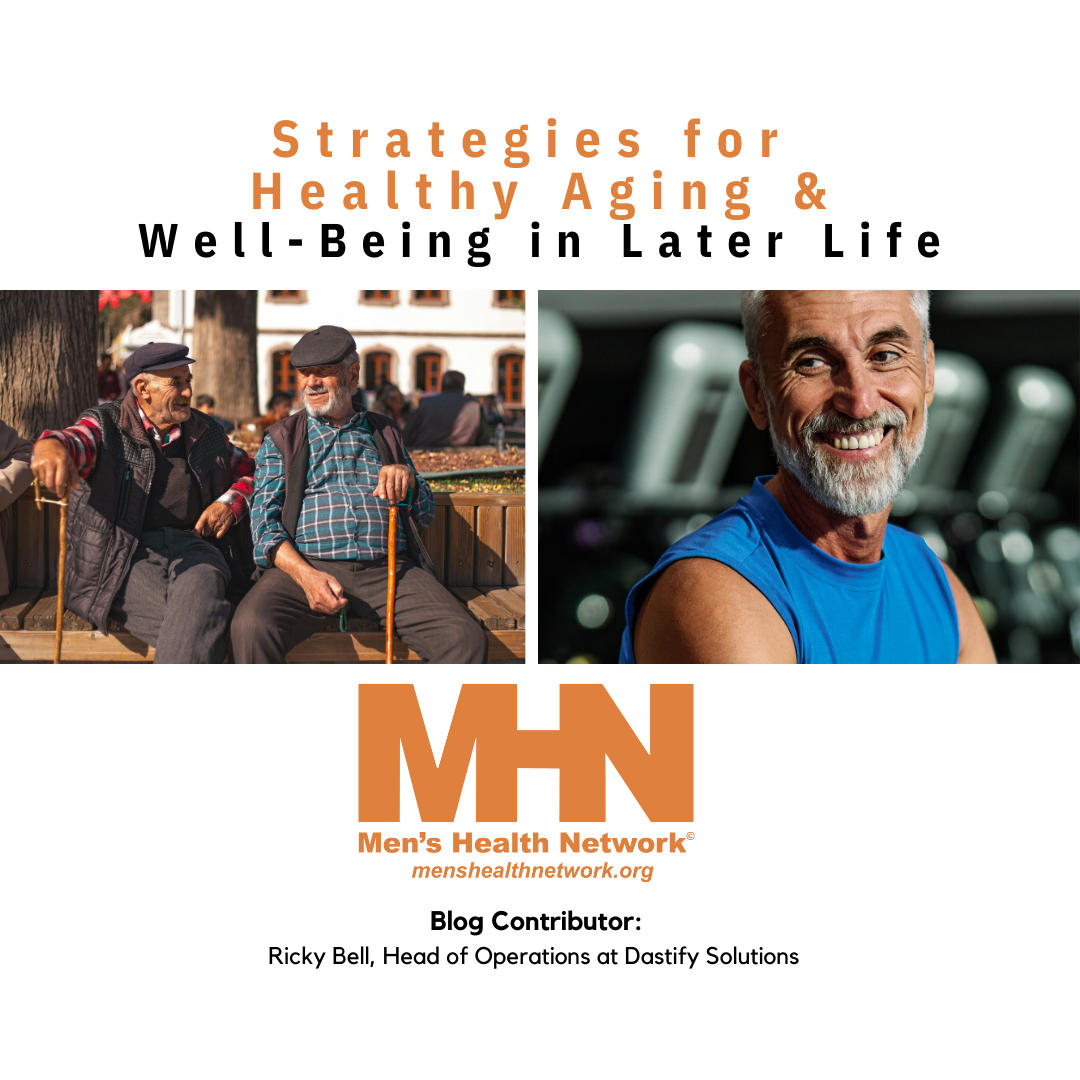
Strategies for Healthy Aging and Well-Being in Later Life
Blog Contributor: Ricky Bell
* The thoughts, opinions, and viewpoints of this blog do not necessarily reflect the viewpoint or stances of Men’s Health Network.
Most people think of graying hair and wrinkles as signs of getting older. In reality, aging is associated with changes in physical, cognitive, and emotional aspects of functioning. For example, muscle mass and bone density decrease, metabolic rates slow, and the risk of developing chronic conditions such as heart disease, diabetes, and arthritis increases. Cognitive changes may be related to memory and processing speed, while older individuals, on an emotional level, may encounter issues like loneliness or anxiety.
What if growing older didn’t mean slowing down but instead offered new opportunities to live healthier than ever before? Aging does not have to be a period of decline only. If one engages in proper health-promoting behaviors, the majority of negative outcomes associated with aging can be prevented or even reversed, thereby enabling the person to enjoy an energetic and self-sufficient life in advanced age. This article discusses practical methods to keep fit, have a sharp mind, be emotionally stable, and maintain overall health in senior years in later life.
How Can We Prioritize Physical Health as We Age?
Maintaining physical health is foundational for overall well-being. Several key areas deserve attention:
1. Nutrition
A balanced diet provides all the necessary nutrients for energy, immunity, and organ function. As one gets older, they require fewer calories but more specific nutrients, such as calcium, vitamin D, and protein, to maintain bone health and muscle mass. Fruits, vegetables, lean proteins, whole grains, and healthy fats will introduce variety into this diet and help meet these requirements. Water intake is also very important; thirst is diminished with age.
2. Regular Exercise
It offers great benefits to both the body and the mind. Strength training can prevent the loss of muscle mass and bone density, lessening the risk of falls and bone fractures. Aerobic exercises, such as walking, swimming, or bicycling, improve heart health and stamina. Actually, flexibility and balancing exercises, such as yoga or tai chi, support mobility and decrease injury risk. Even moderate activity, such as daily walks or stretching routines, can dramatically improve quality of life.
3. Preventive Healthcare
Preventive HealthcareRegular check, ups and screenings are essential for early detection and proper management of chronic diseases. Blood pressure, cholesterol, blood sugar, and cancer screenings should be kept up to date. Vaccinations, such as flu and shingles shots, are also very helpful in preventing illness. Having a primary care physician helps you get tailored advice for your health and well-being.
Mental Health and Cognitive Wellness
Cognitive health is just as important as physical health, and maintaining mental sharpness requires consistent attention.
1. Lifelong Learning
The brain can be kept sharp by learning, reading, or engaging in the arts, as these activities stimulate its neural pathways and may help prevent brain aging. It does not matter whether you are learning a new language, taking a course, painting, or playing a musical instrument; the important thing is keeping the brain consistently engaged and challenged.
2. Social Connections
Aging adults face a very big problem of feeling lonely and being socially isolated, and that is why depression, diminished cognitive abilities, and poorer physical health often accompany these situations. Social engagement, staying in touch with and being involved with other people through community groups, volunteering, family, or meeting friends online, heals emotional wounds and gives one a feeling of significance.
3. Mindfulness and Stress Management
Long-term stress can cause both mental and physical health problems. Meditation, deep breathing, and writing one’s thoughts and feelings in a diary are some ways to cope with stress effectively, elevate one’s mood, and build one’s capacity to withstand adversity even brief daily mindfulness sessions.
4. Advocating for Your Health
Understanding how to use the healthcare system well can be tricky, especially if one is juggling multiple health conditions or insurance claims. One way to lessen the burden and increase one’s sense of wellness is to educate oneself on ways to ensure that the treatments and medical services one is receiving are recognized, such as learning how to carry out medical claim appeals successfully.
Being proactive and adopting self-advocacy skills is a sure way to ensure one’s health needs are met effectively and accurately.
Supporting Emotional and Spiritual Well-Being
Health is holistic, encompassing emotional and spiritual dimensions alongside physical and cognitive wellness.
1. Purpose and Meaning
It is well known that having a purpose in life plays an important role not only in personal emotional resilience but also in overall life satisfaction. Here are a few ideas of where purpose may come from: one may decide to become a mentor to the younger generation, get engaged in activities that fuel one’s creativity, start volunteering, or even become a member of a community group. Having a fulfilling time with one’s choices deepens the feeling that life has meaning.
2. Positive Relationships
On the other hand, it is also a fact that to be emotionally healthy, one has to maintain strong, supportive relationships. Such relationships can be with family members, friends, acquaintances, peers, and the like. Staying in touch with people one loves and who love one back helps one avoid loneliness and gives one a sense of belonging. Acts such as kindness, empathy, and communication are the glue that holds relationships together and brings happiness not only to the giver but also to the receiver.
3. Gratitude and Reflection
On top of that, one can also enhance emotional resilience by taking a few moments now and then to look back on what was done and the experiences had, and to identify sources of gratitude. To be specific, carrying out one or more of the following alone or combined may help one develop a positive outlook and feeling of satisfaction, i.e., keeping a gratitude diary, making it a point to recognize even the smallest pleasures of the day, and patting oneself on the back for achievements, great and small.
4. Adapting to Change
Growing older means, in most cases, changes in the physical and social environment that one has to get used to. One way to increase one’s resilience is to accept changes rather than fight them. Modifications to the living quarters for safety, changes to the daily schedule, or the exploration of new hobbies to match one’s energy level can be examples of such changes. Being flexible and having a positive attitude towards change helps people deal with transitions more pleasantly.
5.Technology and Aging
Technological advances today have the potential to greatly benefit senior citizens.
Examples include devices one wears that continuously monitor vital health signs and medical consultations via video, which eliminate the need for the patient to be physically present. The technology thus helps one take charge of one’s health. Educational websites, social media, and online forums all help to keep one engaged, connected, and learning for a lifetime.
Encouraging Community Engagement
Sharing our knowledge and experiences of getting older can lead to greater awareness and support for those at the same life stage. Community programs, wellness workshops, and online forums offer different ways to connect and learn from one another. It’s through talking, reacting to others’ experiences, and giving each other advice that we can get to know one another better and create an environment that nurtures and enables.
Conclusion
Aging gracefully is not just about adding years to life but adding life to years. By focusing on physical health, mental wellness, emotional balance, and social connection, individuals can navigate the aging process with vitality and dignity. Proactive care, curiosity, and engagement with community resources empower older adults to thrive, rather than merely cope, in their later years.
Ultimately, maintaining health and well-being as we age requires intention, knowledge, and self-compassion. By embracing healthy habits, nurturing meaningful relationships, staying engaged, and taking steps such as improving the success rate of medical claim appeals, aging can be a time of growth, joy, and fulfillment.
Author

Authored by Ricky Bell, Head of Operations at Dastify Solutions with 9 years of experience. Reviewed for compliance and accuracy by Anum Naveed the company’s Director of Compliance She has 5 years of experience. Ricky brings more than nine years of hands-on experience in revenue cycle management, including leadership roles at CureMD and MedCare MSO. Anum adds over a decade of U.S. healthcare compliance expertise, ensuring each publication aligns with HIPAA, CMS, and payer policy standards.