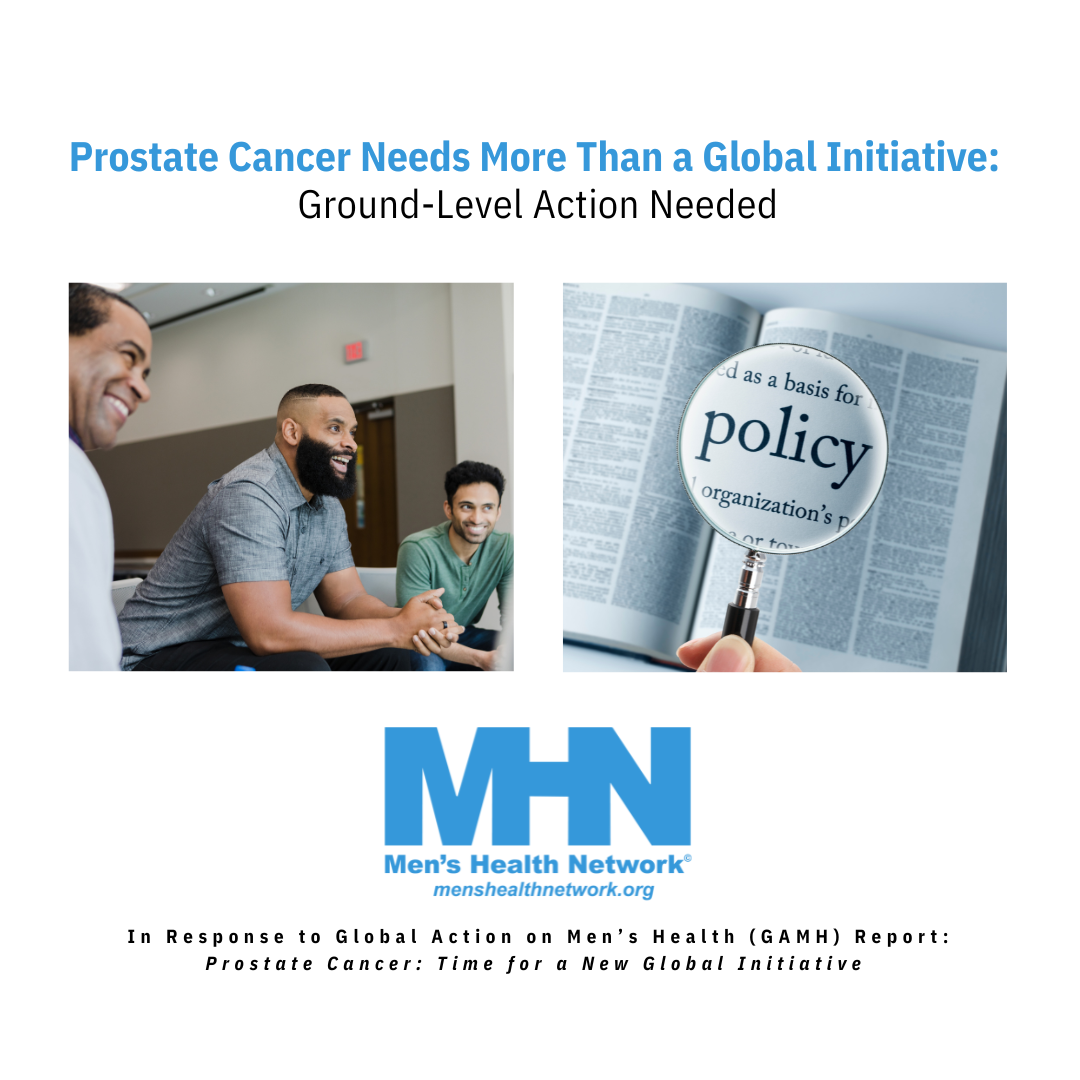
Men’s Health Network responds to Global Action on Men’s Health’s new report on prostate cancer with a call for urgent, ground-level action. While supporting a WHO-led global initiative, MHN stresses that real impact requires community outreach, empathy-driven education, and trusted local engagement. Prostate cancer is rising fast, especially among underserved men, yet too many go without screening or support. This Men’s Health Month, MHN urges policymakers and the public to bridge the empathy gap and take action now. Learn more, get involved, and help bring life-saving care to where men live, work, play, and pray.Continue reading
Category: Health
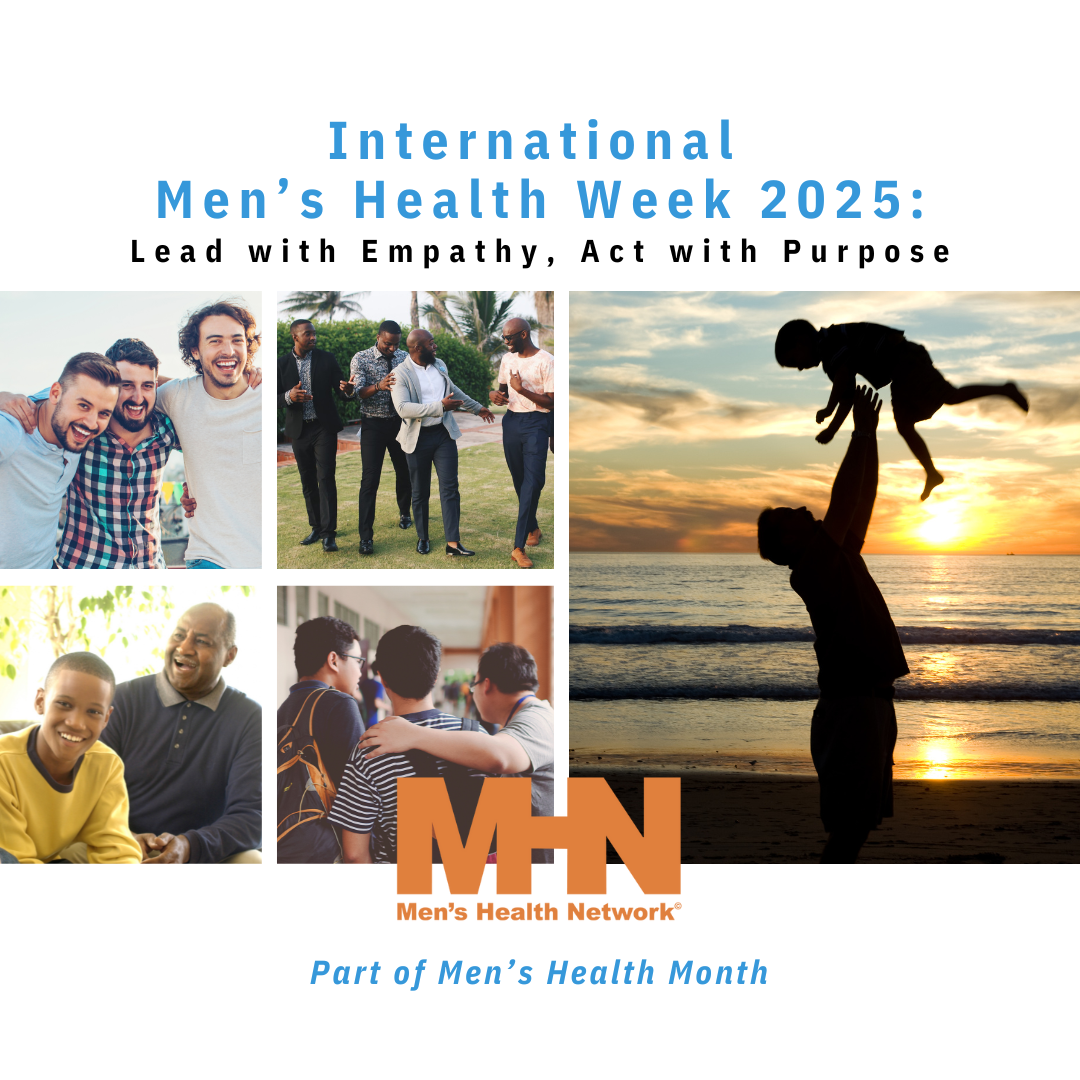
International Men’s Health Week 2025: Lead with Empathy, Act with Purpose
As we celebrate International Men’s Health Week, it’s important to recognize where it all began. Men’s Health Network not only launched Men’s Health Week and Men’s Health Month—they laid the groundwork for a global movement. Their advocacy helped pass the original Congressional resolution in 1994, signed into law by President Bill Clinton, establishing Men’s Health Week as a national observance. From there, they created the infrastructure, messaging, and coalition-building that gave rise to what is now an international health campaign.Continue reading
When a Leader’s Diagnosis Becomes a National Wake-Up Call: Prostate Cancer, Awareness, and the Urgent Need for Change
Former President Joe Biden’s stage 4 prostate cancer diagnosis underscores a national failure in men’s health and preventive care. Men’s Health Network is calling for urgent reform to PSA screening guidelines, improved prostate cancer awareness, and expanded support for men’s healthcare—especially for those over age 70. Prostate cancer is highly treatable when detected early, making timely prostate screenings critical. This moment is a wake-up call to prioritize men’s health policy, close the Lifespan Gender Gap, and increase health education for men.Continue reading
Global Data Confirms It: Men’s Health Deserves Focus, Funding, and a Future
In response to the recent PLOS Medicine, "Sex-disaggregated data along the gendered health pathways" Article: It’s a vital contribution to the men’s health conversation and affirms something we’ve said all along: Men's health outcomes will improve when we prioritize men’s health intentionally. At MHN, we see this Article as a roadmap, but it’s up to all of us—health professionals, policymakers, community leaders, and advocates—to act on it. Follow along for all of our commentary on this article... Continue reading
The Role of Lifestyle Choices in Men’s Health: Nutrition, Exercise, & Beyond
You don’t need to overhaul your life overnight. Start small. Pick one habit this week—meal prep, daily walks, earlier bedtime—and commit to it. Over time, these small wins compound into real, measurable health improvements. Yet many men are still unaware of just how impactful their habits can be. The good news? Even small, consistent changes can lead to significant improvements in overall well-being. In this article, I’ll outline the evidence-based lifestyle pillars that support physical, mental, and metabolic health in men—and offer practical strategies to start improving them today.Continue reading
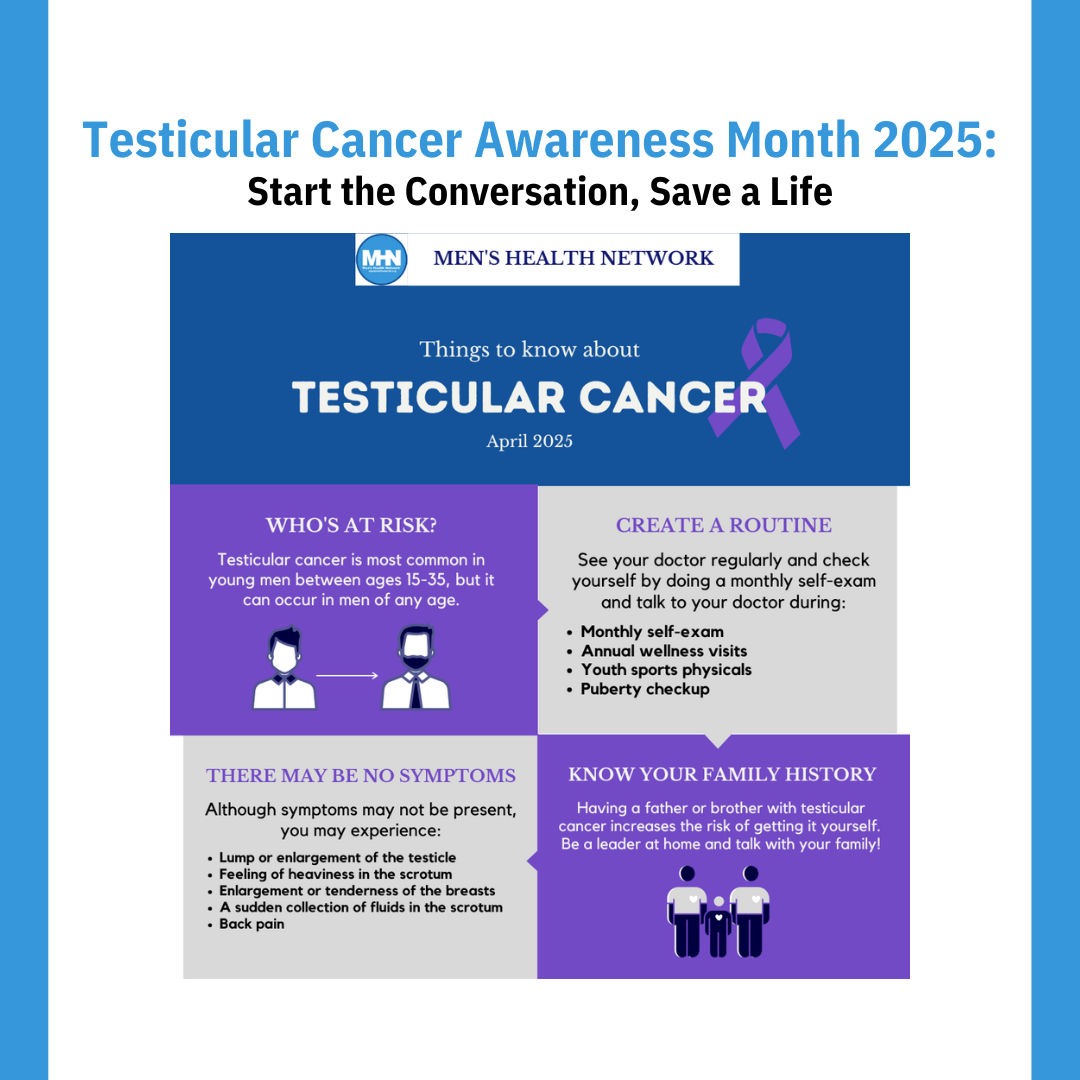
Testicular Cancer Awareness Month 2025: Start the Conversation, Save a Life
Every year, we promote awareness around April being Testicular Cancer Awareness Month (TCa). TCa is a young man's disease and still largely stigmatized. We believe that creating a culture of prevention starts with families, communities, and personal connections. MHN encourages parents and caregivers to integrate discussions about testicular cancer into everyday life. It's also important to use April as a time of spreading care, awareness, empathy, support, and funding for important men's health topics, including Testicular Health and Wellness.Continue reading
Jet Lag Can’t be THAT Bad: Issues Linked to Lack of Sleep
Men, especially those juggling long work hours or night shifts, often lead this pack, with lifestyle releases like late-night screen time or caffeine cutting into rest. Poor quality of sleep is a common issue that disrupts lives every day and night. Insomnia, marked by trouble falling or staying asleep, affects an estimated 10-30% of adults globally, with around 10% experiencing chronic symptoms lasting months or more, according to the American Academy of Sleep Medicine. That’s roughly 33 million people grappling with persistent sleeplessness, often tied to stress, anxiety, or medical conditions.Continue reading
Signs & Symptoms: Men & Colorectal Cancer
Colorectal cancer usually begins as noncancerous polyps that turn into cancerous polyps as the disease progresses. Symptoms of colorectal cancer depend on the size and location of the polyps. Some early warning signs of colorectal cancer may be subtle but should not be ignored. Read on for more information today.Continue reading
Recreational Medicine: Playing Sports Improves Health Physically, Mentally, and Socially
Is any game healthier than the others? It’s hard to compare the physical fitness of players from one sport to another in terms of what is “healthier;” however some are generally accepted as best for having well-rounded fitness–that is, being fit in all areas of your health rather than a few. Any good workout routine incorporates muscle and bone strength, flexibility, endurance, and cardio. Tennis, basketball, and soccer include high-intensity cardio and use most of your body, and as team sports, they improve your mental and social well-being. What’s important is that some activity is better than none, and that you choose something that you enjoy, something that moves you. Continue reading
Barriers to Men Seeking Preventive Care: Improving the Health & Wellness of Men & Boys!
In an effort to catch women's health up, there has been an overcompensation of preventative resources dedicated to women resulting in an eventual gap in men’s preventative services (Baker, 2021). With more and more preventative ads as well as interventions targeting non-men, many men are being left behind and ignored. The combination of men interacting with preventive services less and preventive services not focusing on men, an exponential effect of preventive care being underutilized takes place.Continue reading