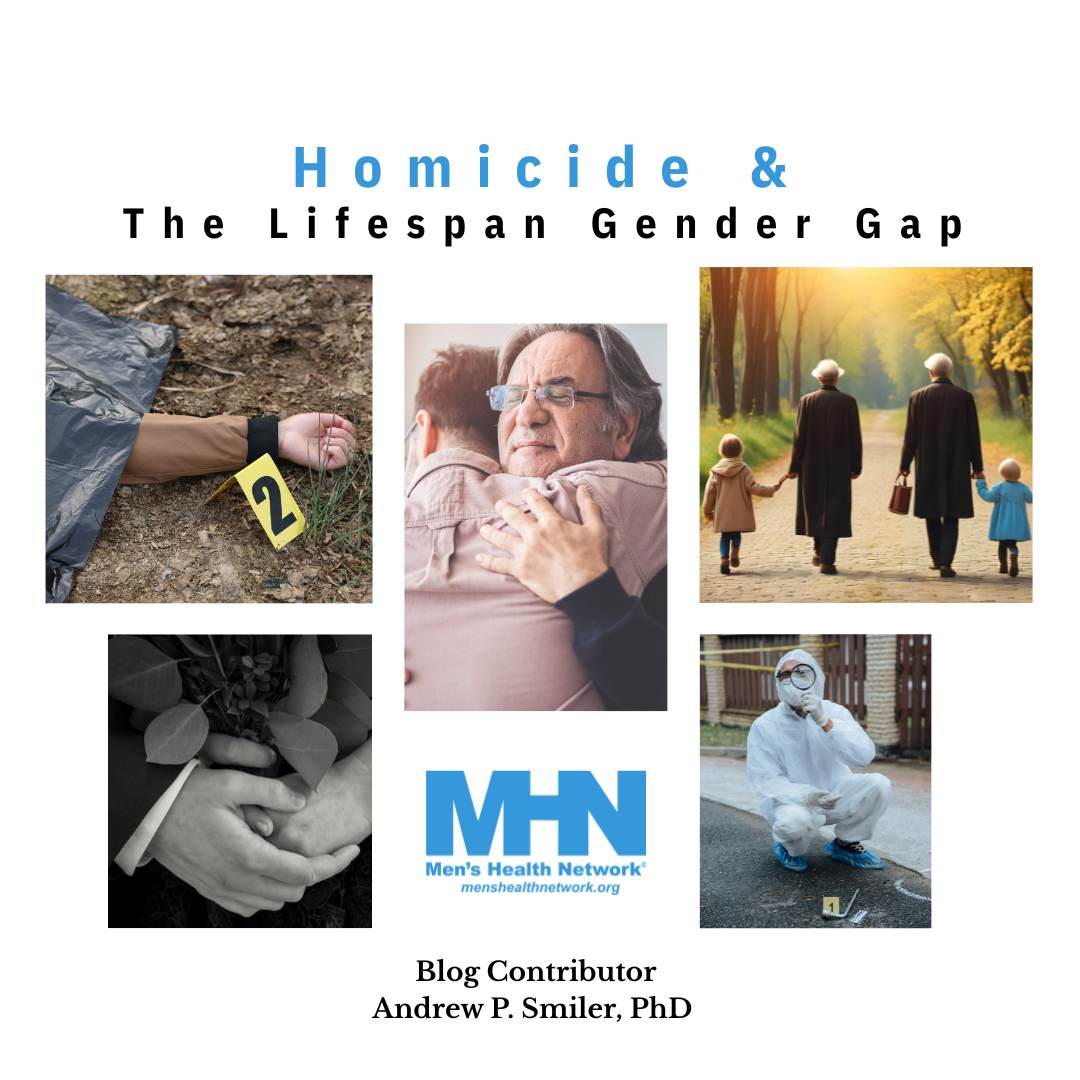
Summary: Men’s Health Network highlights how homicide contributes to the Lifespan Gender Gap—the nearly six-year difference in life expectancy between men and women. Each preventable death of a young man shortens the national average and represents lost potential, relationships, and community strength. In his article, Dr. Andrew Smiler examines data showing that men account for 80% of homicide victims, with most deaths occurring among young men under 35. Many are killed by people they know, often in moments of conflict or status-related tension. Smiler suggests that prevention begins with education—teaching boys and men how to resolve conflict, manage emotions, and de-escalate situations without violence. Men’s Health Network calls for greater empathy and early intervention to help young men live longer, healthier lives, reminding readers that every life saved helps close the gap and strengthen families and communities nationwide.Continue reading
Tag: men and boys
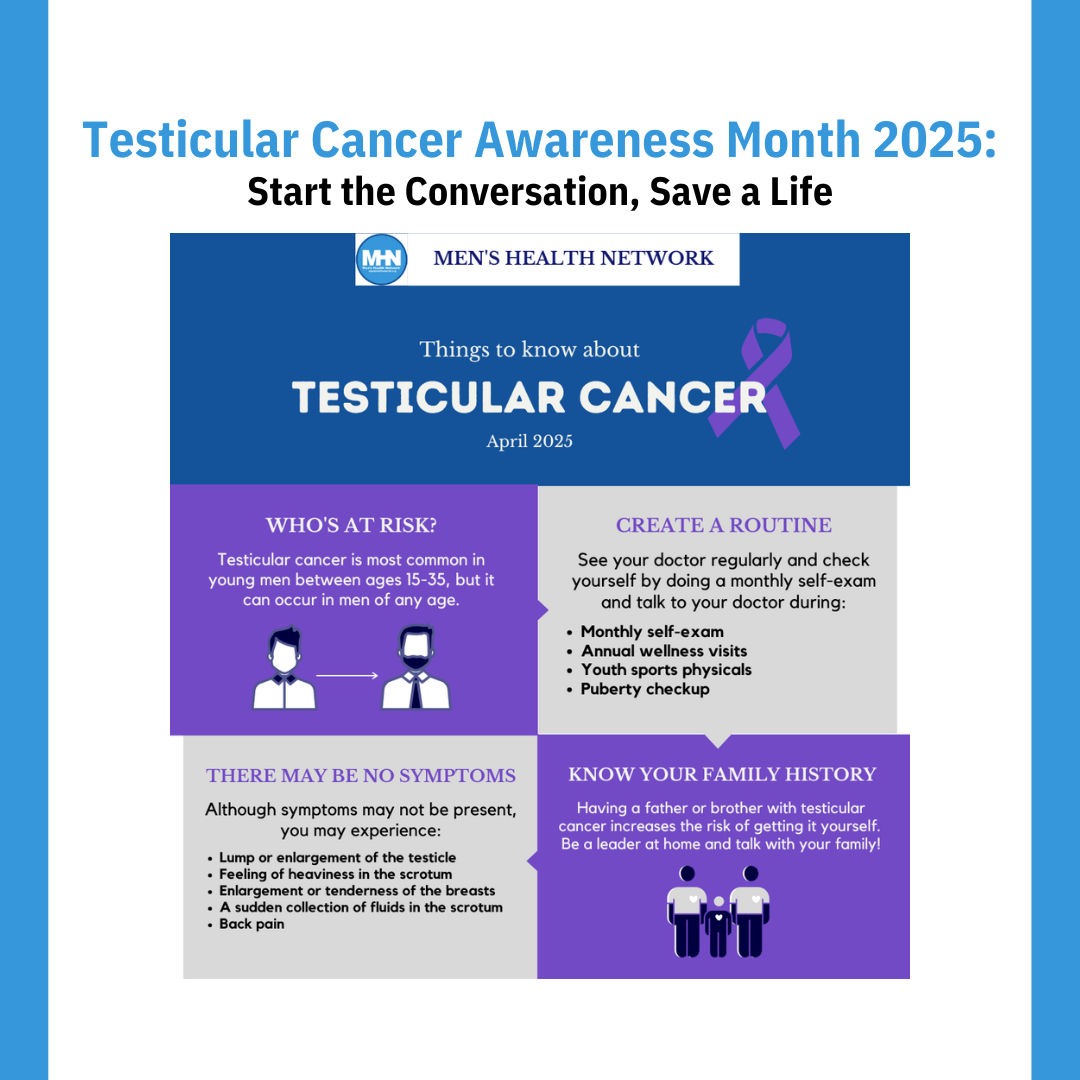
Testicular Cancer Awareness Month 2025: Start the Conversation, Save a Life
Every year, we promote awareness around April being Testicular Cancer Awareness Month (TCa). TCa is a young man's disease and still largely stigmatized. We believe that creating a culture of prevention starts with families, communities, and personal connections. MHN encourages parents and caregivers to integrate discussions about testicular cancer into everyday life. It's also important to use April as a time of spreading care, awareness, empathy, support, and funding for important men's health topics, including Testicular Health and Wellness.Continue reading
Expanding Healthy People 2030: A Community-Driven Approach to Men’s Health
Healthy People 2030's next iteration should incorporate male-focused community initiatives that foster adequate support for the health needs of men and boys. By working together—across public health sectors, education systems, workplaces, and community organizations—we can create an environment where all individuals, regardless of sex, have the opportunity to live longer, healthier lives. Read on for more information on how men and boys stand up against Social Determinants of Health as stated in existing policy.Continue reading
Understanding Modern Masculinity: A Review of Men at the Brink, Masculinity in the 21st Century
For those invested in the men’s health movement, Men at the Brink provides a crucial perspective on the evolving discourse around masculinity. It bridges the gap between history, mental health, and cultural analysis, offering practical insights for those who want to better understand the challenges facing men today. Dr. Jachim’s work underscores the importance of fostering discussions that move beyond blame and instead focus on constructive solutions. Whether you're a mental health professional, an advocate for men's well-being, or simply someone interested in the topic, this book serves as an invaluable resource. At Men's Health Network, we believe that conversations like these are essential for progress. By promoting literature that encourages thoughtful discussion and critical analysis, we hope to continue fostering a more informed and supportive approach to men's health and identity.Continue reading
Dating in the Digital Age: The Unique Challenges Gen Z Men Face
Modern dating is a complex landscape for men, shaped by societal pressures, digital platforms, and evolving relationship norms. The tendency to blame and shame men oversimplifies their struggles, ignoring systemic issues like economic pressures and the stigmatization of vulnerability. By fostering empathy, challenging stereotypes, and encouraging authenticity, society can create a healthier dating culture that supports meaningful connections for everyone.Continue reading
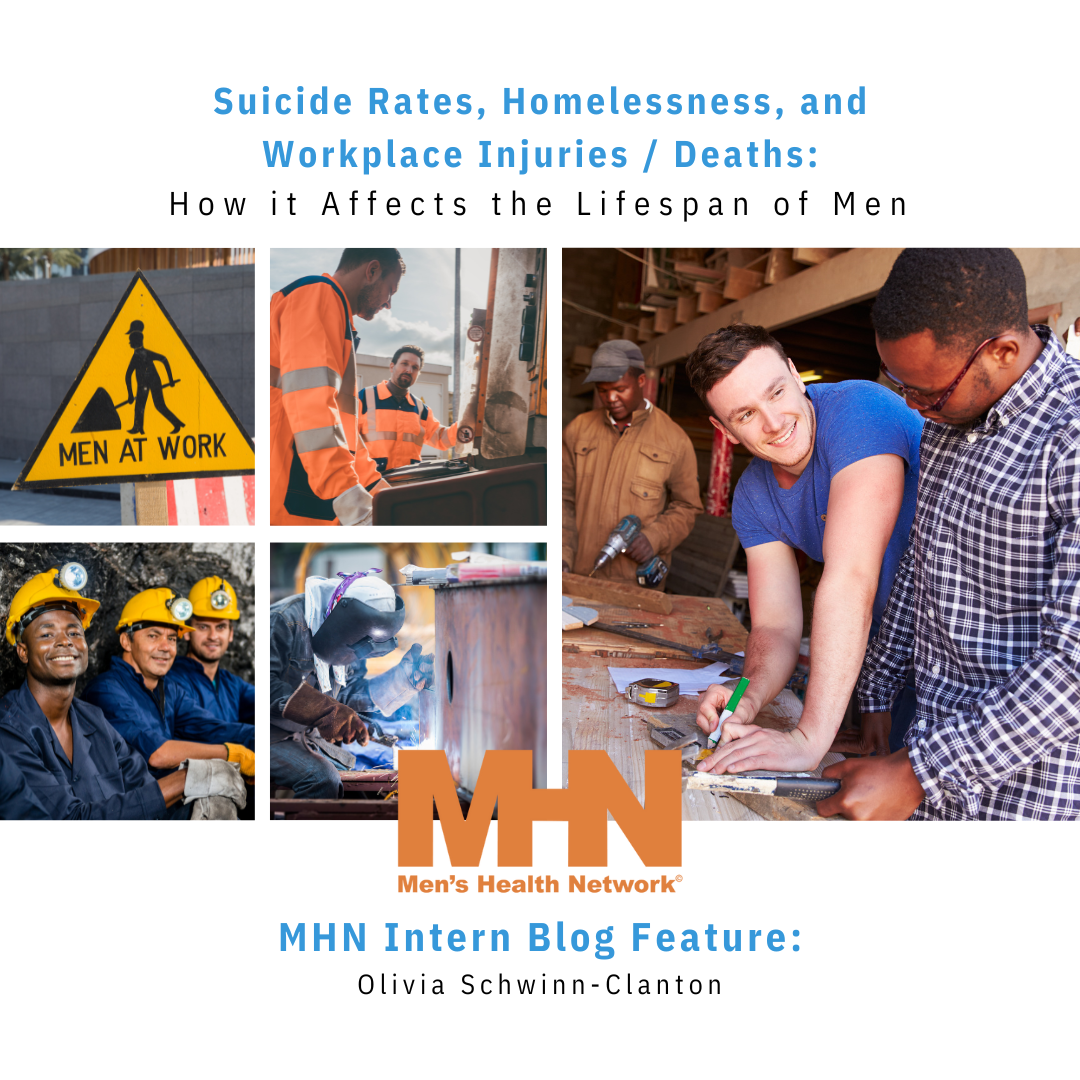
Suicide Rates, Homelessness, and Workplace Injuries / Deaths: How it Affects the Lifespan of Men
Suicide Rates, Homelessness, and Workplace Injuries / Deaths: How it Affects the Lifespan of Men By: Intern Olivia Schwinn-Clanton Introduction – Lifespan of Men In the United States and around the world, women usually live longer than men. By age 65, 57% of people that age are women, and by age 85, that number increases...
Prioritizing Men’s Health: Why It Saves Lives and Money
Shorter lifespans and higher rates of serious illnesses. An article from BadCredit.org sheds light on why prioritizing men’s health not only saves lives but also reduces economic burdens. At Men’s Health Network (MHN), this message is at the core of our mission: reaching men, boys, and their families where they live, work, play, and pray.Continue reading
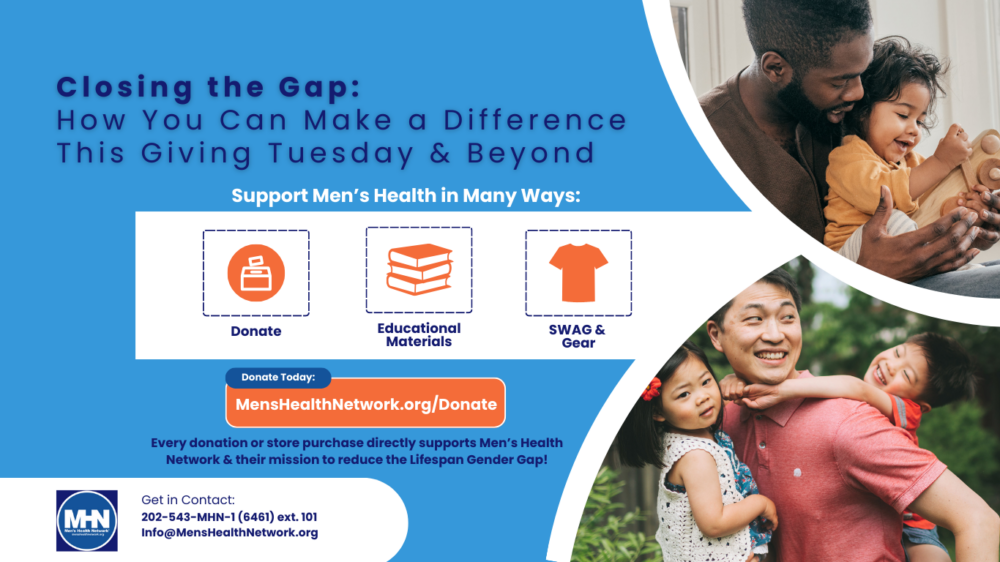
Closing the Gap: How You Can Make a Difference This Giving Tuesday and Beyond
We need your help this Holiday Season to make an impact with the health and well-being of men and boys everywhere. The Lifespan Gender Gap has widened to 6 years, with men dying way too early from preventable diseases. We need everyone's help to get life-saving education, resources, and more into the hearts of communities across America. Consider purchasing from the Men's Health Network store or by donating today. Continue reading
Advances to Mirror From Women’s Health: Examining Gender Disparities in Healthcare Policies & Resources
Advances to Mirror From Women’s Health: Examining Gender Disparities in Healthcare Policies & Resources In recent years, there has been commendable progress in implementing policies and acts aimed at enhancing women’s health outcomes. These initiatives have rightfully focused on addressing the unique health challenges faced by women. However, as we celebrate these advancements, it’s imperative...Continue reading
Testicular Cancer Awareness Month: A Disease of Youth and Health Negligence
Testicular Cancer Awareness Month: A Disease of Youth and Health Negligence April is Testicular Cancer Awareness Month. This month, along with other awareness periods that particularly emphasize the necessity of men’s well-being, is often overlooked by those operating in the health advocacy sphere. And if not comprehensively ignored, discussion surrounding testicular cancer is often relegated...Continue reading