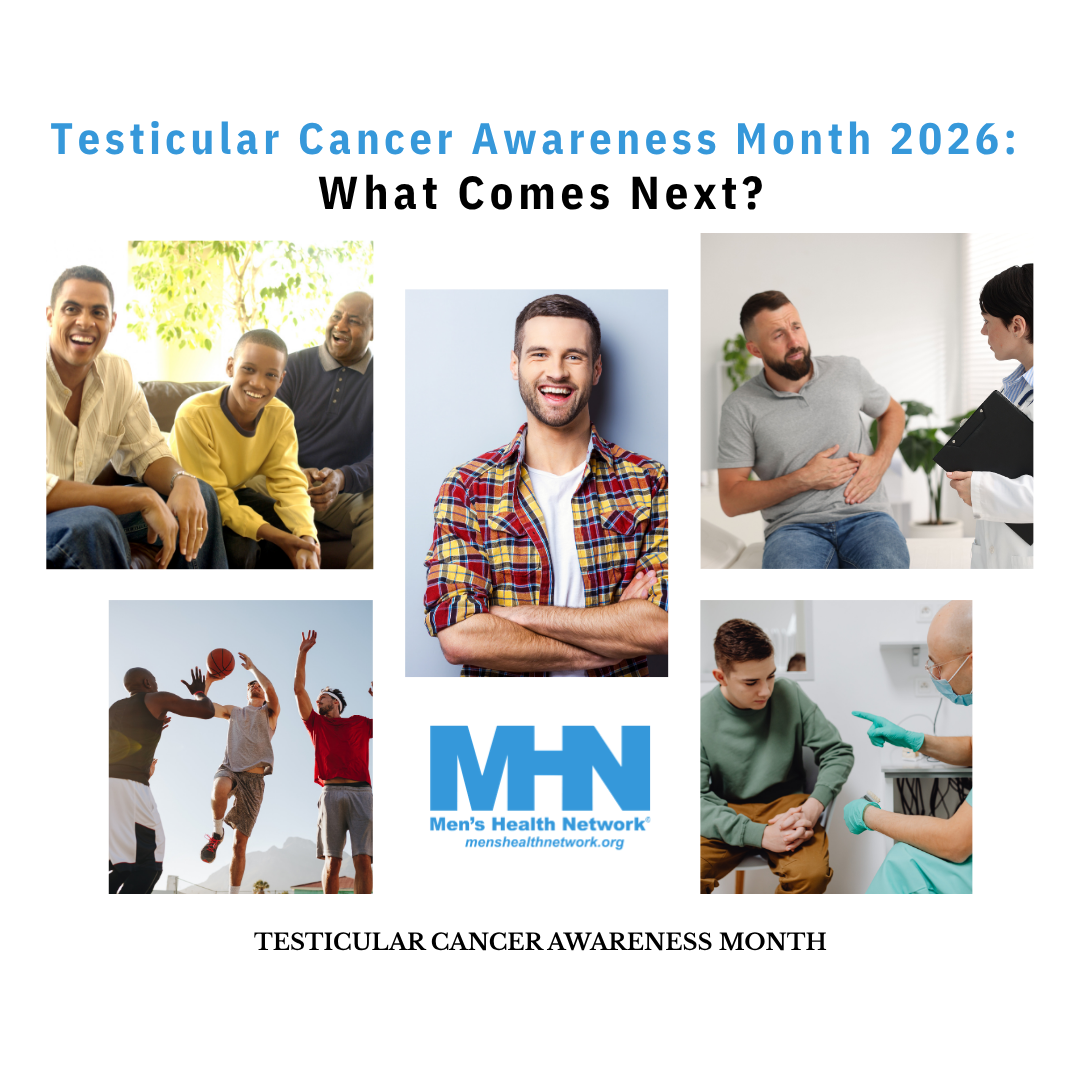
Testicular Cancer Awareness Month emphasizes the importance of early detection and open conversations, especially for young men ages 15–35 who are most at risk. Through education and awareness, individuals are encouraged to recognize changes, speak up, and engage with healthcare earlier. Stories like Steve’s highlight how a simple conversation can lead to early detection and life-saving outcomes, reinforcing that small moments and supportive relationships play a critical role in improving men’s health.Continue reading
Tag: early detection
Testicular Cancer Awareness Month… Partners in Care: Know Your Risk. Talk with Your Family.
Testicular Cancer Awareness Month highlights the importance of early detection, education, and open conversations about a cancer that most often affects young men ages 15–35. With nearly 10,000 diagnoses each year in the United States and high survival rates when detected early, awareness and proactive health behaviors are critical. The theme, “Partners in Care: Know Your Risk. Talk with Your Family,” emphasizes the role families and communities play in supporting men’s health through communication, self-awareness, and early engagement with care.Continue reading
Men’s Health Network Joins National Coalitions: Supporting Bladder Cancer Research Funding and Strengthening the Nursing Workforce
MHN announced its support for two national policy initiatives aimed at improving men’s health outcomes. The organization joined national coalitions advocating for the creation of a Bladder Cancer Research Program within the Department of Defense CDMRP and for federal policy updates recognizing post-baccalaureate nursing degrees as professional degrees to strengthen the healthcare workforce. The announcement highlights the importance of cancer prevention, research investment, and expanding access to care, particularly for men who face higher mortality rates and barriers to preventive services.Continue reading
Men’s GI Health: Conditions to Be Aware of and How to Prevent
Men often overlook GI health, but digestive issues can affect overall wellness and may signal serious conditions like IBD, GERD, liver disease, or colorectal cancer. Key warning signs include persistent abdominal pain, bowel changes, unexplained weight loss, and blood in the stool. Prevention centers on a healthy diet, exercise, limiting alcohol, avoiding smoking, and managing stress. Routine screenings—especially colonoscopies starting at age 45—are essential. Early detection and healthy habits can significantly reduce the risk of serious GI disease.Continue reading
This Giving Tuesday: Be the Change Men’s Health Needs
Giving Tuesday is next week, and Men’s Health Network (MHN) is calling on supporters to help close the Lifespan Gender Gap and build empathy for men’s health. This year, MHN expanded outreach across communities, churches, and schools, relaunched the Congressional Men’s Health Caucus, and supported bipartisan resolutions like H.R. 1300 (PSA Screening for HIM Act) and H.R. 675 (Prostate Cancer Awareness Month), advancing prevention and early detection nationwide. From toolkits that reached thousands to Ambassadors leading local events, MHN continues reaching men where they live, work, play, and pray. Your support powers awareness, education, and advocacy that saves lives.Continue reading
The Congressional Men’s Health Caucus: Congress Reaffirms National Men’s Health Week During Men’s Health Month
In recognition of Men’s Health Month 2025, Congressman Troy A. Carter Sr. introduced a bipartisan resolution honoring National Men’s Health Week (June 9–15). Backed by the Congressional Men’s Health Caucus, the resolution emphasizes the importance of preventive care for men, raising awareness about critical issues like prostate cancer, testicular cancer, mental health, and chronic disease. With men continuing to die younger and seek care less often than women, this action urges greater focus on early detection, routine health screenings, and breaking the stigma around men’s health care. Men’s Health Network encourages individuals and communities to take action and support men’s health awareness throughout the month of June.Continue reading
Prostate Cancer Needs More Than a Global Initiative: Ground-Level Action Needed
Men’s Health Network responds to Global Action on Men’s Health’s new report on prostate cancer with a call for urgent, ground-level action. While supporting a WHO-led global initiative, MHN stresses that real impact requires community outreach, empathy-driven education, and trusted local engagement. Prostate cancer is rising fast, especially among underserved men, yet too many go without screening or support. This Men’s Health Month, MHN urges policymakers and the public to bridge the empathy gap and take action now. Learn more, get involved, and help bring life-saving care to where men live, work, play, and pray.Continue reading
When a Leader’s Diagnosis Becomes a National Wake-Up Call: Prostate Cancer, Awareness, and the Urgent Need for Change
Former President Joe Biden’s stage 4 prostate cancer diagnosis underscores a national failure in men’s health and preventive care. Men’s Health Network is calling for urgent reform to PSA screening guidelines, improved prostate cancer awareness, and expanded support for men’s healthcare—especially for those over age 70. Prostate cancer is highly treatable when detected early, making timely prostate screenings critical. This moment is a wake-up call to prioritize men’s health policy, close the Lifespan Gender Gap, and increase health education for men.Continue reading
Signs & Symptoms: Men & Colorectal Cancer
Colorectal cancer usually begins as noncancerous polyps that turn into cancerous polyps as the disease progresses. Symptoms of colorectal cancer depend on the size and location of the polyps. Some early warning signs of colorectal cancer may be subtle but should not be ignored. Read on for more information today.Continue reading