October is National Depression and Mental Health Awareness and Screening Month, a time to bring attention to the silent crisis affecting men and boys. In this blog, Men’s Health Network highlights the deep connection between suicide and the Lifespan Gender Gap, reminding us that men are four times more likely to die by suicide than women. Contributor Dr. Andrew Smiler examines the data, cultural pressures, and life circumstances, such as loss of work or relationships, that contribute to male suicide rates. The piece urges readers to break the silence, check in with the men in their lives, and remember that reaching out for help is a sign of strength. Together, we can close the gap and remind the world that mental health is men’s health.Continue reading
Category: Suicide
Simple and Effective Ways Fathers Can Support Healthy Habits in Kids
Fathers play a powerful role in shaping their kids’ lifelong health. By modeling good habits—like eating balanced meals, staying active, keeping a sleep routine, managing emotions, and building positive relationships—dads can make healthy living natural, fun, and lasting.Continue reading
Man Therapy® – You Can’t Fix Your Mental Health With Duct Tape.
This blog highlights Man Therapy®, a groundbreaking men’s mental health initiative that uses humor, education, and stigma-smashing strategies to engage men upstream of crisis. By reframing mental health as a sign of strength and providing practical tools, resources, and research-backed approaches, Man Therapy helps men take action, build resilience, and reduce suicide risk in their communities.Continue reading
Why I Care About Men’s Health… And Why You Should Too
In "Speaking Up for the Silent Majority," Shelby Leventhal, a college senior at the University of Kentucky, shares a powerful perspective on why women should care about men’s health. Drawing from her own experiences and observations, she explores the stigma that keeps many men from seeking care and urges women to play a more active role in encouraging the men in their lives to prioritize both physical and mental health. Through personal stories, cultural reflection, and a call to action, Shelby makes a compelling case for empathy, awareness, and support in the men’s health movement.Continue reading
Shattering the silence: A fresh story for men’s mental health
In Shattering the Silence: A Fresh Story for Men's Mental Health, guest contributor Aaradhana Aiyyar explores how cultural norms around masculinity prevent many men from seeking mental health support. The piece highlights the hidden signs of male depression, the physical toll of emotional suppression, and the urgent need to redefine strength as vulnerability. With practical steps for individuals, families, and communities, this blog is a call to action to destigmatize men’s mental health and build a culture where emotional honesty is seen as courage—not weakness.Continue reading
This Men’s Health Month: Let’s Shift the Focus to DAD!
Father’s Day is next week, which makes this an especially important time to reflect on and support dads everywhere. We may not always know the burdens they shoulder. Many men feel it’s best to stay silent about the physical or mental pain they’re carrying. They just want to be the rock in their family—the steady protector who never asks for help. But we must remember: even the strongest need support. Too many fathers are suffering in silence, believing it’s their role to bear it all alone. Whether it’s unspoken anxiety, untreated chronic pain, or invisible burnout, these internal battles are real—and often devastating if left unaddressed.Continue reading
Expanding Healthy People 2030: A Community-Driven Approach to Men’s Health
Healthy People 2030's next iteration should incorporate male-focused community initiatives that foster adequate support for the health needs of men and boys. By working together—across public health sectors, education systems, workplaces, and community organizations—we can create an environment where all individuals, regardless of sex, have the opportunity to live longer, healthier lives. Read on for more information on how men and boys stand up against Social Determinants of Health as stated in existing policy.Continue reading
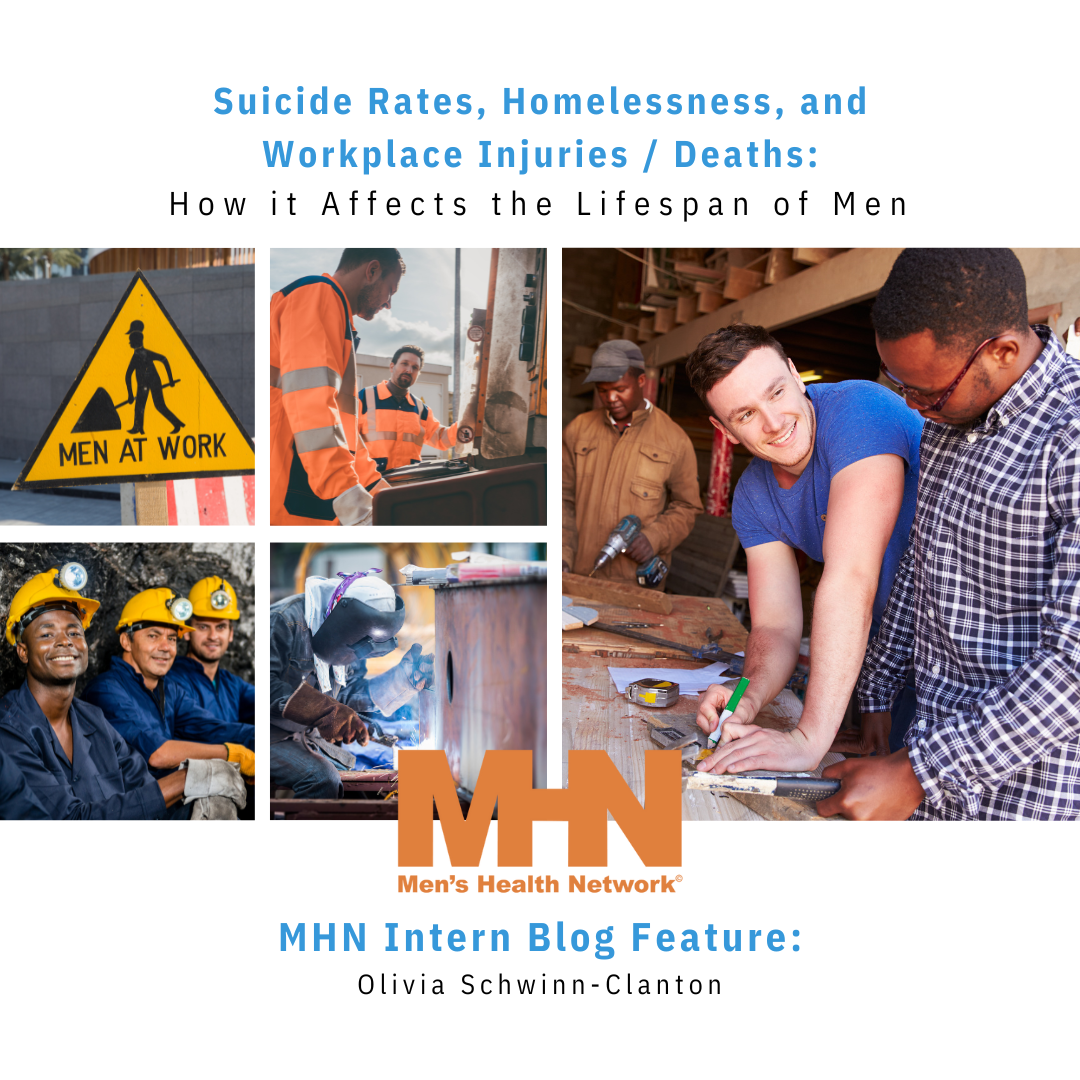
Suicide Rates, Homelessness, and Workplace Injuries / Deaths: How it Affects the Lifespan of Men
Suicide Rates, Homelessness, and Workplace Injuries / Deaths: How it Affects the Lifespan of Men By: Intern Olivia Schwinn-Clanton Introduction – Lifespan of Men In the United States and around the world, women usually live longer than men. By age 65, 57% of people that age are women, and by age 85, that number increases...
Why Are American Men Dying Younger? It’s Time to Build Awareness
The declining life expectancy of American men. This is more than a public health problem—it is a crisis that impacts families, communities, and workplaces across the country. Men’s Health Network (MHN) is dedicated to addressing these challenges, offering solutions to help men live longer and healthier lives, and supporting the families and communities that rely on them.Continue reading
Closing the Gap: How You Can Make a Difference This Giving Tuesday and Beyond
We need your help this Holiday Season to make an impact with the health and well-being of men and boys everywhere. The Lifespan Gender Gap has widened to 6 years, with men dying way too early from preventable diseases. We need everyone's help to get life-saving education, resources, and more into the hearts of communities across America. Consider purchasing from the Men's Health Network store or by donating today. Continue reading