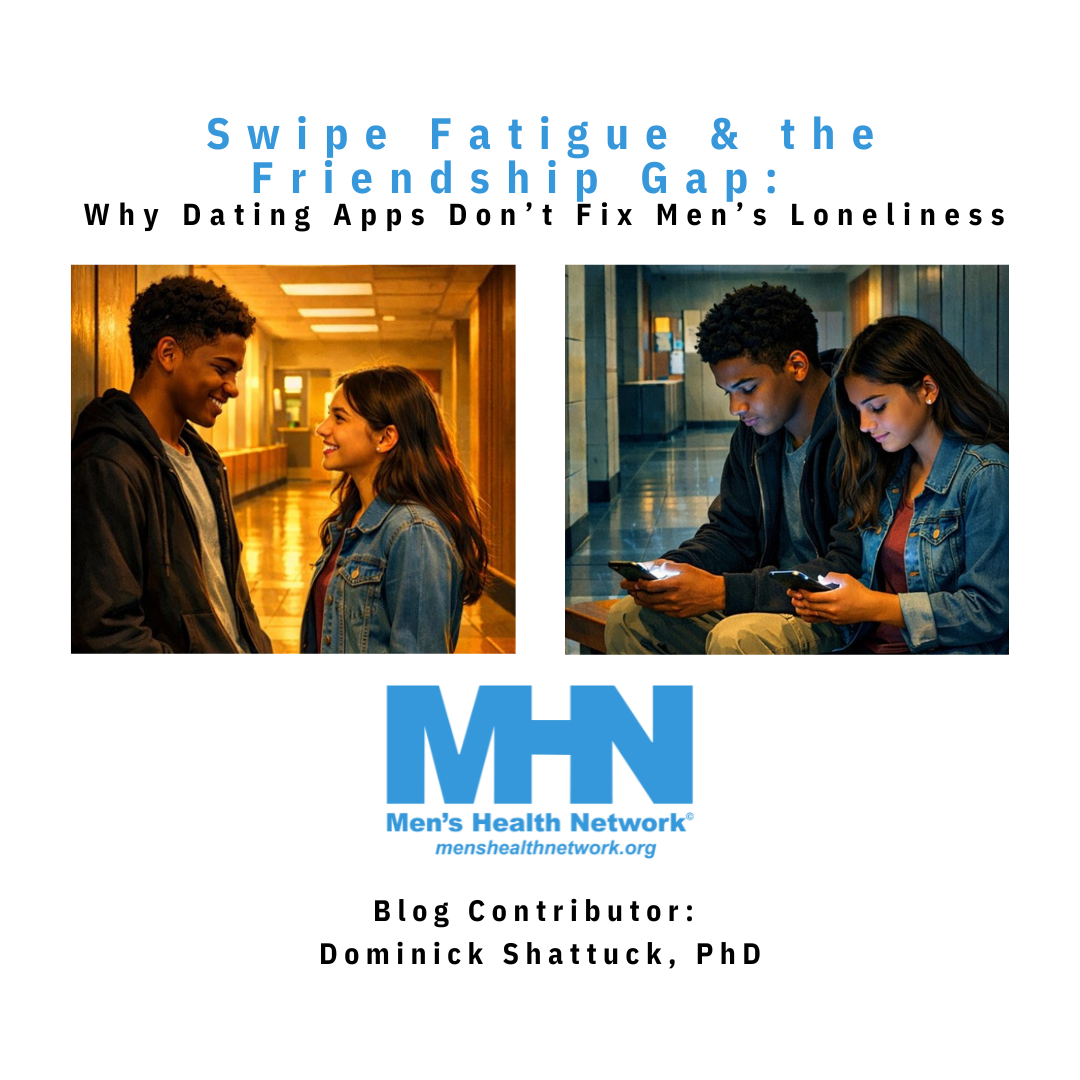
This essay argues that dating apps, while promising unprecedented access to potential partners, are poorly suited to reducing men’s loneliness and may instead exacerbate it by replacing meaningful social infrastructure with rapid, evaluative selection. Drawing on research from social psychology, sociology, and public health, the author explains that durable relationships depend on “friendship markets”—environments with repeated interaction, shared purpose, and social permission for vulnerability—which have eroded for men as workplaces, civic groups, and community institutions have declined. Dating apps function as closed markets that promote choice overload, rejection mind-sets, swipe fatigue, and burnout, exposing men to repeated, cumulative rejection without opportunities for relational repair or gradual connection. Evidence shows these dynamics can undermine well-being, increase withdrawal, and fail to address men’s broader needs for friendship, identity, and belonging. The essay concludes that men’s loneliness is not a personal failure or an algorithm problem, but a structural one, and that meaningful progress requires rebuilding real-world, activity-based, and community-centered friendship markets rather than relying on dating apps to solve a problem they were never designed to address.Continue reading